If you’ve ever walked through an orchard at dusk or stood in a garden staring at a trail of ants marching toward a spilled jar of honey, you’ve witnessed one of nature’s most sophisticated communication systems: pheromones. As a supplier of pheromone lures, I talk to farmers, gardeners, and pest control professionals every day who have the same question: how exactly do these tiny, chemical-based lures pull off the trick of guiding, distracting, or disrupting insect navigation? It’s not magic—it’s a finely tuned biological mechanism that we’ve spent years refining in our lab, and understanding it is key to why these lures have become a cornerstone of sustainable pest management. Pheromone Lures
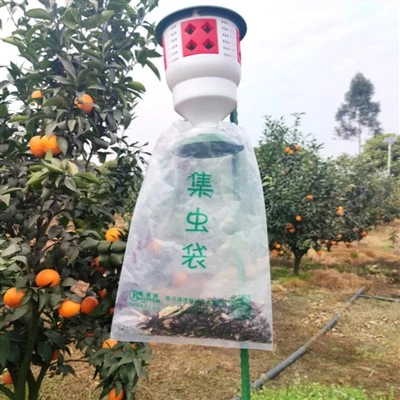
Let’s start with the basics. Insects don’t “smell” the way we do. Their antennae are packed with specialized sensory cells, each tuned to a single type of pheromone molecule—think of them like tiny radios that only pick up one frequency. For most species, these pheromones fall into two main categories: sex pheromones, which are released to attract mates, and aggregation pheromones, which signal food sources or safe shelter. When an insect picks up these molecules, it doesn’t just register a scent; its brain processes the chemical signal as a direct command to move toward (or sometimes away from) the source. That’s the core of insect navigation via pheromones: a chemical signal that acts as a directional beacon.
But it’s not as simple as following a straight line to the source. Insects have evolved a very specific behavior to track these signals, called “anemotaxis.” If you watch a male moth tracking a female’s sex pheromone trail, you’ll see it fly in a zig-zag pattern, turning left and right. Here’s why: pheromones don’t drift in a smooth, continuous cloud through the air. Wind breaks the scent into tiny, discrete plumes that drift and disperse. The moth’s antennae constantly sample the air, checking for the presence of the pheromone. When it detects the molecule, it flies upwind; when it loses the plume, it circles back until it finds it again, repeating the cycle until it reaches the source. We’ve observed this same behavior in a wide range of insects, from codling moths that attack apple orchards to Japanese beetles that feast on roses.
This is where our pheromone lures come in. Most of the lures we produce are synthetic versions of the exact pheromones insects use in the wild. But synthetic doesn’t mean identical to nature—we engineer these molecules to be released at a consistent, steady rate that mimics a real female or food source, sometimes even extending the release time to 3 or 4 months, which is perfect for a full growing season. When we deploy a lure in a field or garden, it creates a continuous artificial scent plume that bugs can’t tell apart from a natural one. For farmers, this is invaluable: instead of having to spray broad-spectrum pesticides that kill beneficial insects along with pests, they can use these lures to monitor pest populations (knowing exactly when to intervene before an infestation takes hold) or even to disrupt mating entirely by flooding an area with so much synthetic sex pheromone that male bugs can’t find real females.
Of course, there’s a lot more to insect navigation than just following a scent trail. Many species use multiple cues at once: visual landmarks, temperature, humidity, and even the Earth’s magnetic field. Pheromones are just one piece of the puzzle, but they’re often the most reliable, especially over short distances. For example, a bark beetle that’s searching for a new tree to colonize might use visual cues to spot a conifer, then switch to following aggregation pheromones once it gets close enough to the tree. We’ve tested our lures in field trials to make sure they work in these real-world contexts, not just in a lab. Last year, we worked with a group of apple growers in Washington State who were struggling with codling moths, which lay eggs inside apples and cause them to rot. They deployed our codling moth lures across 200 acres, and within a season, the number of damaged apples dropped by 70%—because the lures confused the male moths, so they couldn’t mate and lay eggs.
There’s a common misconception that pheromone lures work only for specific pest species, and that’s true. They’re highly species-specific, which is actually a good thing. You won’t attract Japanese beetles with a lure made for corn rootworms, and vice versa. That specificity is rooted in biology: the sensory cells on an insect’s antennae are so finely tuned that they won’t pick up pheromone molecules from other species. We take advantage of that specificity when formulating our lures, because it means we’re not harming bees, ladybugs, or other beneficial insects that are essential for a healthy ecosystem. That’s a big part of why sustainable agriculture has embraced these lures so quickly—they align with the push to reduce chemical pesticide use and protect pollinators.
Another key part of how pheromone lures affect insect navigation is their ability to create “noise” in an insect’s signal processing. When a male moth is tracking a female’s natural pheromone trail, his brain prioritizes that signal above all others. But if there are hundreds (or thousands) of artificial lures in the area, the male’s antennae are bombarded with so much of the synthetic pheromone that he can’t distinguish the real female’s signal. He’ll fly around in circles, unable to find a mate, which means no new eggs are laid. This is called mating disruption, and it’s one of the most powerful uses of pheromone lures today. We’ve had customers use this method successfully for everything from grapevine moths in California vineyards to gypsy moths in forested areas of the Northeast.
But it’s not all about large-scale agriculture. We also supply lures for home gardeners, who often deal with pests like tomato hornworms or rose chafers. A lot of small-scale growers don’t realize that pheromone lures work just as well in their backyards, as long as they use the right one. For a tomato hornworm, for example, the lure is a synthetic version of the female moth’s sex pheromone, placed a few feet above the tomato plants. The male moths will be drawn to the lure instead of laying eggs on the tomatoes, and gardeners can also use the lure to monitor when moths are active, so they can pick off any remaining caterpillars by hand if needed. It’s a simple, low-cost solution that doesn’t require any harsh chemicals.
Of course, there are challenges to getting these lures right. For one, environmental factors can affect how well the scent plume disperses. Wind speed, temperature, and even humidity can change the shape and density of the pheromone cloud. If the wind is too strong, the plume might break up before insects can reach it; if it’s too calm, the scent might not spread far enough. That’s why we work with customers to tailor lure placement and quantity to their specific location and pest. For example, in a small garden with low wind, you might only need one lure for tomato hornworms, but in a large orchard, you might need one lure every few acres to create a continuous disruption zone. We also test our lures in different climates to make sure the synthetic pheromone remains stable and releases at a consistent rate, even in extreme heat or cold.
Another challenge is pest resistance. Just like bugs can become resistant to pesticides, they can evolve to be less responsive to pheromone lures over time. That’s why we regularly update our lure formulations, working with entomologists to study pest populations and adjust the synthetic pheromone mix if needed. It’s an ongoing process, but one that’s critical to keeping our lures effective year after year. We also recommend that customers rotate lures with other pest management methods, like crop rotation or biological control (using natural predators like lacewings), to reduce the risk of resistance.
I’ve been in this business for 12 years, and what I find most rewarding is hearing from customers who’ve seen a real difference. Last summer, a small organic vegetable farmer in Michigan told me that after using our cucumber beetle lures, he didn’t have to use any insecticides on his cucumbers and squash for the entire growing season. He sold more produce at the local farmers’ market because his vegetables were free of chemical residues, and he made more profit than the year before when he had to spray. That’s the impact pheromone lures can have—they’re not just a product; they’re a tool that helps people farm more sustainably while also being profitable.
At the end of the day, the science of how pheromone lures affect insect navigation is rooted in the simple, fascinating reality that insects are guided by chemical signals. We’ve spent decades decoding those signals, turning them into synthetic lures that work with nature, not against it. Whether you’re a large-scale farmer looking to manage a heavy pest population or a home gardener trying to protect your favorite roses, there’s a pheromone lure that can make a difference.
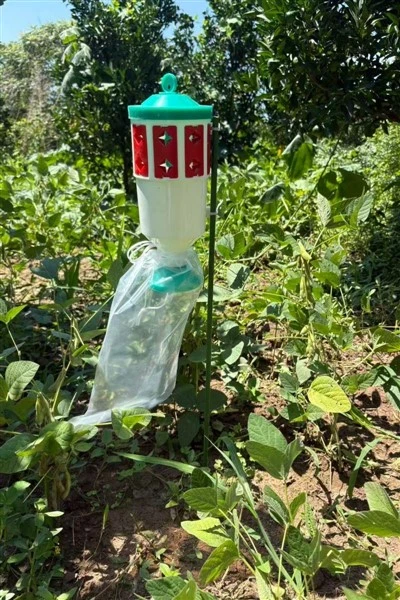
If you’re interested in learning more about how our pheromone lures can work for your specific needs, or if you’d like to discuss quantities, pricing, or testing a sample for your crop or garden, we’re here to help. We can walk you through the best placement, how many lures you’ll need, and any additional steps you can take to maximize effectiveness. Don’t hesitate to reach out to start a conversation about making your pest management more sustainable and effective.
Agricultural Monitoring System References
Landolt, P. J., & Phillips, T. W. (1997). Host plant influences on sex pheromone behavior of phytophagous insects. Annual Review of Entomology, 42, 371-391.
Miller, J. R., & Gut, L. J. (2015). Mating disruption of lepidopteran pests: principles and practice. Annual Review of Entomology, 60, 205-225.
Vickers, N. J., & Baker, T. C. (1994). Spatial scale of pheromone plumes and the orientation behavior of male Oriental fruit moths, Grapholita molesta (Lepidoptera: Tortricidae), in flight. Journal of Insect Behavior, 7(5), 671-693.
Witzgall, P., Kirsch, P., & Cork, A. (2010). Sex pheromones and their impact on pest management. Journal of Chemical Ecology, 36(1), 80-100.
Sichuan Ruijinte Technology Co., Ltd.
As one of the most professional pheromone lures manufacturers in China, we have world-leading production equipment and strong manufacturing capabilities. Please rest assured to wholesale high quality pheromone lures at competitive price from our factory. Customized orders are welcome.
Address: No. 616, 6th Floor, Building 1, No. 8, Tianjiu North Lane, High-tech Zone, Chengdu
E-mail: glock@rjt-agri.com
WebSite: https://www.rjtagri.com/
