As an industrial rubber sheet supplier, I’ve spent countless hours in our warehouse and lab watching how these unassuming products hold up under real-world stress. Last month, a client who manufactures heavy-duty conveyor systems called me in a panic—their standard rubber sheets were cracking halfway through a 24/7 production cycle for a mining operation. They’d never seen failure like this before, and it turned out their equipment cycled a massive 1,200 times an hour, a rate far higher than most conveyor setups. That moment drove home a question I get more and more from engineers and operations managers: How do industrial rubber sheets actually perform under cyclic loading? It’s not a simple answer, but it’s one that directly impacts uptime, maintenance costs, and bottom lines for every industry that relies on these materials. Industrial Rubber Sheet
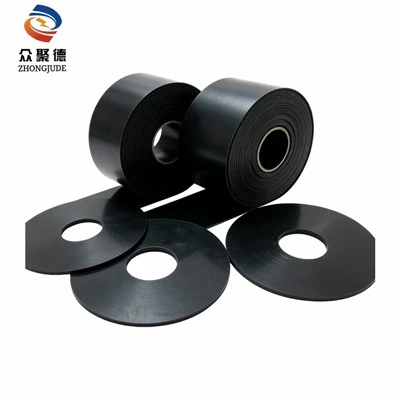
Let’s start with the basics to get on the same page. Cyclic loading, in this context, means repeated, regular stress applied to a rubber sheet over time—think the constant compression from conveyor belts, the flexing of rubber gaskets on rotating industrial equipment, or the repeated stretching of rubber used in vibration isolation pads for heavy machinery. Every cycle, even small ones, adds up. A rubber sheet that seems fine during a quick visual check can fail unexpectedly after thousands, or even millions, of cycles. The performance here doesn’t just depend on the rubber compound, either—it’s tied to how that compound is processed, how it’s installed, and even the environment it’s working in.
From our supplier’s perspective, I’ve seen firsthand that not all industrial rubber is made equal when it comes to cyclic loading. The rubber’s molecular structure is the foundation of its performance. Natural rubber, for example, has long polymer chains that can stretch and then recoil without breaking, similar to a thick rubber band. That’s why it’s been a go-to for years in applications where flexibility is key—like conveyor belting and vibration mounts. But natural rubber has a weak spot: it breaks down quickly when exposed to ozone or extreme temperatures, and those factors can speed up failure during cyclic loading. We’ve seen clients switch to nitrile rubber for oil and gas applications, since nitrile resists petroleum-based fluids, but it can get stiff in cold weather, which makes it more prone to cracking when flexed repeatedly. Then there’s silicone rubber, which holds up well to heat and UV light but is much softer, so it can compress too much under cyclic loading, leading to permanent deformation.
The biggest failure mechanism we see with cyclic loading is something called fatigue crack growth. Let me explain this with a story from our lab. A few months back, we ran a test on two batches of neoprene rubber sheets that were identical in thickness and compound, the only difference was the curing time. Batch A was cured for the standard 20 minutes at 150°C, while Batch B was cured for an extra 5 minutes. We put both through 10 million compression cycles at 1 Hz, simulating the load from a heavy industrial pump. At 2 million cycles, Batch A had a tiny surface crack—so small you could barely see it with a magnifying glass. By 7 million cycles, that crack had grown to 2 mm, and by 10 million, the sheet split clean in two. Batch B? No cracks at all. That’s the impact of proper curing: better cross-linking between polymer molecules means the rubber can handle repeated stress without letting small defects turn into full-on failure. It’s a simple detail, but so many clients skip asking about curing specs when selecting rubber sheets, and it comes back to bite them when their equipment runs around the clock.
Another key factor is dynamic modulus, a term our R&D team uses constantly. Dynamic modulus measures how stiff a rubber is when under cyclic stress, and it’s not a fixed number—it changes with each cycle. For example, when you first load a rubber sheet, it’s stiffer, but after a few hundred cycles, it softens slightly. That change in modulus might seem trivial, but it has real consequences. Take the conveyor client I mentioned earlier: their original rubber sheet had a dynamic modulus that dropped 15% after just 10,000 cycles. As it softened, the belt sagged more, creating uneven loading on the edges, which in turn caused the rubber to flex more on each cycle, accelerating crack growth. Once we swapped them for a custom compound with a 5% drop in dynamic modulus over the first 100,000 cycles, their failure rate dropped by 80% in the first three months. That’s the kind of data that makes choosing the right rubber for cyclic loading non-negotiable.
Environment plays a role too, something I’ve observed both in our testing lab and out in the field with clients. A rubber sheet used in a food processing plant that cycles 500 times an hour will perform very differently than the same sheet used in a steel mill where the air is full of metal dust and the temperature swings between -10°C at night and 40°C during the day. The metal dust acts as an abrasive, wearing away the rubber’s surface with each cycle, while temperature swings make the rubber expand and contract, adding extra stress that isn’t part of the original cyclic loading test we run. We had a client in a cement plant who tried to use our standard EPDM rubber sheets for their chute liners, but within six months, the sheets had worn thin and cracked. It turned out the combination of repeated impact from falling cement clinker, abrasive dust, and high humidity created a perfect storm for fatigue. We worked with them to adjust the compound to have higher abrasion resistance, and they haven’t had a liner failure in over a year.
Installation is another piece of the puzzle that’s often overlooked. I can’t tell you how many times we’ve received a call from a client saying their new rubber sheet failed within a week, only to find out they stretched it too tight during installation, or didn’t leave enough room for flexing. When a rubber sheet is installed under too much initial tension, each cyclic load adds to that pre-existing stress, cutting the number of cycles it can handle by half or more. Last year, we did a site visit to a packaging plant where rubber sealing strips on their automated packaging lines were splitting every 10 days. The plant maintenance team had stretched the strips so they wouldn’t slide out of place during operation, and that pre-stretching meant the first cycle of flexing caused a micro-tear. We walked them through proper installation techniques—how to leave a 5% slack in the strip, how to cut it to the exact length without overstretching—and the strips now last over three months. It’s a small adjustment, but it makes a huge difference in cyclic performance.
Now, for anyone who’s ever asked: How do we predict how long a rubber sheet will last under cyclic loading? It’s not an exact science, but it’s something we refine every day. We run accelerated fatigue tests in our lab, where we cycle rubber samples much faster than real-world use, then extrapolate the results to estimate service life. For example, a test that runs 10,000 cycles in an hour can help us model how the rubber will perform over 10 years of 8-hour daily use. But we always caveat that prediction with real-world factors: temperature, environment, installation, even how the equipment is operated. A client who runs their conveyor at maximum capacity 24/7 will have a shorter service life than a client who runs it 8 hours a day at half load, even if they use the same rubber sheet.
As an industrial rubber sheet supplier, our job isn’t just to sell a product—it’s to help clients understand how that product will perform when it’s put to work. I’ve seen too many companies pick the cheapest rubber sheet only to end up paying more in downtime, emergency repairs, and replacement costs. That’s why we take the time to ask questions: What’s the cyclic rate of your equipment? What’s the operating temperature? Are there oils, chemicals, or abrasives present? How is the rubber sheet being installed? Those details help us recommend the right compound, thickness, and even installation tips to make sure the rubber holds up.
For example, a wind turbine vibration isolation pad has to cycle millions of times over 20 years, handle extreme temperatures, and resist UV light. We don’t just use a standard rubber for that—we custom-form a EPDM-based compound with high cross-link density to handle the cyclic stress, add UV stabilizers to resist outdoor exposure, and test it to 50 million cycles to make sure it meets the turbine’s 20-year warranty requirement. That’s the kind of attention to detail that separates a good rubber sheet from one that fails prematurely.

At the end of the day, cyclic loading is one of the biggest challenges for industrial rubber sheets, but it’s also a challenge we understand deeply. Every day, we learn something new from our clients, our lab tests, and the field. If you’re dealing with rubber sheet failure under repeated stress, or just want to make sure your current setup is optimized for cyclic loading, I’d encourage you to reach out. We can walk through your application, run any necessary tests, and help you find a solution that keeps your operations running smoothly, cuts downtime, and saves you money in the long run.
Silicone Rubber Mat Reference
- Gent AN. Engineering with Rubber: How to Design Rubber Components. 2nd ed. Hanser Gardner Publications; 2001.
- ASTM D4570-18, Standard Test Method for Rubber Property—Fatigue Crack Growth, Annual Book of ASTM Standards, 2018.
- Mars WV, Fatemi A. Fatigue behavior of rubber materials under multiaxial loading. International Journal of Fatigue. 2004;26(5):525-537.
- Thomas AG. Rupture of rubber. I. Characteristic energies for tearing. Journal of Applied Polymer Science. 1955;1(2):45-52.
- ISO 1431-1:2018, Rubber, vulcanized or thermoplastic—Resistance to ozone cracking—Part 1: Static strain test, International Organization for Standardization, 2018.
Hebei Zhongjude Power Technology Co., Ltd.
With abundant experience, we are one of the most reliable industrial rubber sheet manufacturers and suppliers in China. Welcome to buy bulk high quality industrial rubber sheet for sale here and get quotation from our factory. For price consultation, contact us.
Address: Shenghe Plaza, No. 88 Qilian Street, High-tech Zone, Shijiazhuang City, Hebei Province, China
E-mail: zhongjude@outlook.com
WebSite: https://www.zjdinsul.com/
