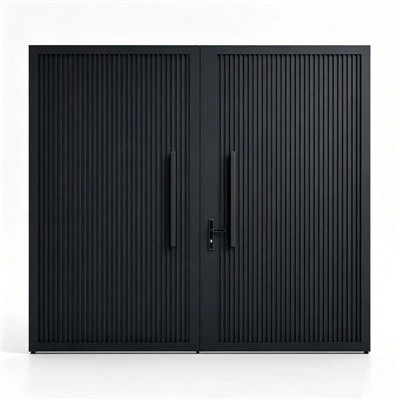
If you’ve ever stood in a commercial building lobby, a hospital corridor, or a high-rise apartment entrance and noticed that heavy, seamless stainless steel door blocking the way during a fire drill, you might have wondered: How thick is that door, anyway? As a stainless steel fire-resistant door supplier, I get this question all the time—from architects specifying materials for a new office tower, to facility managers updating their building’s life safety systems, even to homeowners looking for extra protection for a backyard guest house or home wine cellar. The answer isn’t a one-size-fits-all number, though. It ties together fire codes, steel properties, and the specific needs of the space the door is protecting, and getting it wrong could mean the difference between containing a fire and letting it spread through a building. Stainless Steel Fire-Resistant Door

Let’s start with the basics to break this down. Fire-resistant doors aren’t just metal doors with a coat of fire retardant. They’re tested, certified assemblies designed to meet a specific rating—most commonly 1-hour, 2-hour, or 3-hour, depending on where they’re installed. That rating means the door must withstand standard fire exposure conditions (defined by codes like ASTM E119 or UL 263, which measure heat over time, up to 2000°F by the end of the test) for the full duration of the rating period, while also resisting hose stream impact after fire exposure to simulate fire department response.
Stainless steel is a popular choice for these doors because it’s durable, corrosion-resistant, and doesn’t rust or warp easily in everyday use, but its thickness isn’t the only factor in its fire resistance. Wait, but thickness is what everyone asks about first, so let’s lead with that, then explain how it works with other parts of the door.
First, for the door leaf itself—the main panel that swings or slides—stainless steel fire-resistant doors typically use two layers of steel, right? Not just a single sheet. The core between those two layers is usually a mineral-based fire-resistant material, like vermiculite-perlite board or ceramic fiber, which insulates the door from transferring heat to the other side. If the steel was too thin, the heat would conduct through the metal fast enough to ignite materials on the opposite side of the door before the rating period is up. For uninsulated doors (sometimes called “radiation-resistant doors” used for things like electrical vaults where only flame and smoke containment is needed, not heat resistance), thickness is a bit different, but almost all fire-resistant doors used in occupiable spaces are insulated, so we’ll focus on those.
For a 1-hour fire-rated stainless steel door, the outer stainless steel skin (the one exposed to fire) is usually 16-gauge to 14-gauge. Wait, let’s get that exact: in imperial units, 16-gauge steel is 0.0598 inches thick, 14-gauge is 0.0787 inches. But the inner skin (the one facing away from the fire) is often the same, or sometimes slightly thinner, because it doesn’t face the flame directly. The core adds another 1.5 inches to 2 inches of fire-resistant material, so total door thickness for a 1-hour rated door is around 2.5 inches to 3 inches total.
Now, the 2-hour rated door: that’s thicker. The outer stainless steel here jumps to 12-gauge, which is 0.1046 inches thick, and the core is thicker too—up to 3 inches of mineral board—so total door thickness hits 4 inches to 4.5 inches. For 3-hour rated doors, the gold standard for places like high-rise stairwell enclosures or hospital operating room wings, the outer steel is 10-gauge (0.1345 inches thick) or even 8-gauge for extra heavy-duty applications, and the core is 4 inches thick, bringing the total door thickness to 5 inches to 6 inches.
Wait, but hold on—this isn’t a universal rule. I’ve worked on projects where a 2-hour rated door for a nuclear power plant access way was a bit thinner than a commercial 2-hour door, because the nuclear door also had to meet radiation standards, not just fire. And for exterior doors that face salt air (like hotels on the coast or industrial warehouses near the ocean), we might use a thicker stainless steel—maybe 10-gauge even for a 1-hour door—to resist corrosion over time, which would otherwise eat through the steel and compromise the fire rating. Code still requires the 2.5 inch total thickness for the rating, but we add the extra steel to the outer skin to make up for the material’s resistance to environmental factors, not the fire performance.
Another common misconception: thicker steel automatically means a better fire rating. That’s partially true, but only up to a point. The core is actually more important for insulating the door. I had a client a few years ago who wanted a 3-hour rated door, tried to use a single layer of 1/4 inch stainless steel with no core, and wondered why it failed the test. Because steel conducts heat way faster than mineral core material. If you just have a thick steel panel, the heat will pass through it in minutes, not hours. The core slows that heat transfer down, and the steel skins hold the core in place so it doesn’t crumble when exposed to heat.
Then there are the other components that affect the overall fire resistance, because a door is only as strong as its weakest part. Even if the door leaf is 6 inches thick 8-gauge steel, if the frame it’s mounted to is too thin, the frame will warp in the fire and let the door fall out, or let flame and smoke seep around the edges. For stainless steel fire door frames, the frame thickness is usually 12-gauge for 1-hour doors, 10-gauge for 2-hour, and 8-gauge for 3-hour. And then there are the hinges, locks, and intumescent seals—those rubber-like strips around the door edge that expand when heated to seal gaps so smoke and flame can’t get through. I’ve seen a door with a perfect 5-inch thick leaf fail a test because the hinges were regular steel that melted after 90 minutes, not fire-rated hinges made of stainless steel and heat-resistant alloy.
So how do you figure out the right thickness for your project? Let’s break down the most common applications, because that’s what architects and facility managers care about. If you’re putting a door in a typical office building corridor, separating two floors, that’s almost always a 1-hour rating, so total door thickness of 2.5 to 3 inches, with 16-gauge outer stainless steel, 16-gauge inner, and 1.5 inch mineral core. For a hospital, where stairwells and operating rooms need to keep fire from spreading for longer, you’ll need 2-hour rated doors, so 4 to 4.5 inches total thickness, 12-gauge outer steel, 2.5 inch core. For a high-rise building’s main stair enclosure, or a data center where you can’t afford downtime from a fire, 3-hour rated doors are required, so 5 to 6 inches total, 8 or 10-gauge outer steel, 4 inch core.
And don’t forget local code requirements. I’ve had projects where a door that met national UL standards wasn’t approved in a state or city that had stricter rules, like parts of California or New York City, which require additional testing for doors used in public assembly spaces, like restaurants or schools. Those rules might call for a thicker outer steel skin to handle higher hose stream pressure, even if the fire rating is the same.
Another thing I tell customers: when you’re choosing thickness, think about long-term use, not just code minimums. If you’re installing a door in a loading dock that’s used every day, and forklifts might bump into it, a thinner door will dent easily, and dents can crack the core or damage the steel, which compromises its fire resistance. So we recommend going up one gauge on the outer steel for high-traffic or impact-prone areas, even if that means a slightly thicker door than the code minimum, to keep it working properly for 20 or 30 years.
I once had a client who owned a historic warehouse that they were converting into luxury lofts. They wanted stainless steel doors to match the industrial aesthetic, but they also needed 2-hour fire ratings for the common hallway enclosures. At first, they thought the 4-inch thick doors would look too bulky, so they asked if we could use a thinner door. We ran the numbers: a 1.5 inch thick door with a 10-gauge steel skin would never pass a 2-hour fire test, because the heat would go right through the steel into the hallway. We compromised by using a 4-inch door with a brushed finish stainless steel that looked sleek, not bulky, and matched the warehouse’s original steel beams. They were happy with the look, and the door met all code requirements for fire safety.
If you’re still unsure, here’s a quick checklist to use:
- What is the required fire rating? (1-hour, 2-hour, 3-hour) This dictates the core thickness and minimum steel gauge.
- Where is the door located? (Coastal, industrial, high-traffic, historic?) This dictates if you need extra thickness for corrosion or impact resistance.
- What code applies? (Local building code, NFPA, UL, ASTM?) This will confirm the minimum thickness and components required.
At the end of the day, the thickness of a stainless steel fire-resistant door isn’t just a number on a spec sheet—it’s a safety feature that’s been tested to keep people safe. Too thin, and it might not hold up in a fire. Too thick, and it might be hard to operate, or not fit the space you have. The right thickness is a balance of code requirements, the door’s function, and the environment it’s in.
If you’re an architect, facility manager, business owner, or homeowner planning a project that needs a stainless steel fire-resistant door, don’t guess at the thickness. Reach out to us to walk through your specific needs, and we’ll help you pick a door that’s safe, compliant, and built to last.
Balcony Railing References
ASTM International. Standard Test Methods for Fire Tests of Building Construction and Materials. ASTM E119-21.
Underwriters Laboratories. Standard for Fire Tests of Door Assemblies. UL 263-21.
National Fire Protection Association. Life Safety Code. NFPA 101-21.
Steel Door Institute. Standard for Fire-Rated Steel Door Assemblies. SDI 100-20.
Renqiu Zhongsheng Metal Products Co., Ltd.
Renqiu Zhongsheng Metal Products Co., Ltd. is one of the most professional stainless steel fire-resistant door manufacturers and suppliers in China, featured by quality products and low price. Welcome to wholesale advanced stainless steel fire-resistant door made in China here and get pricelist from our factory. Customized orders are welcome.
Address: Liuzhuang Village, Xinzhongyi Town, Renqiu City, Cangzhou City, Hebei Province
E-mail: info@zsaluminum-china.com
WebSite: https://www.zsaluminum-china.com/
