Hey there, fellow fabricators, contractors, and anyone who’s ever stared at a stainless steel sheet going “wait, can this thing even bend without cracking?” As a stainless steel supplier who’s fielded this exact question a hundred times—from a small shop owner working on a custom railing to a big construction team cranking out structural components—I get why it’s such a common head-scratcher. Most people see stainless steel as this rigid, unbreakable metal, and yeah, a lot of grades do feel that way at first glance. But here’s the tea: not only can you bend stainless steel, you have to bend it sometimes, to make everything from kitchen sinks to industrial pipes to decorative trim that stands the test of time. Let’s break this down like we’re chatting in the warehouse break room, no stuffy textbooks needed. Stainless Steel
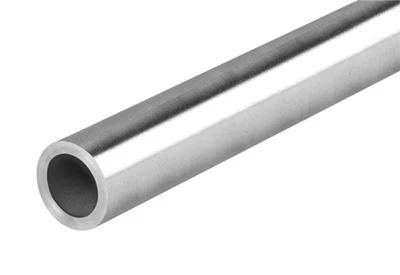
First, let’s get one myth out of the way right now: stainless steel isn’t a single metal. It’s a family of alloys, right? The name itself tells you the big secret—“stain” (it resists rust and stains) plus “steel” (iron with carbon added). But different grades swap out carbon for other elements like chromium, nickel, molybdenum, even nitrogen, and that’s where the bendability changes hard. If you’ve ever grabbed a 304 stainless steel sheet (the most common one, used for everything from fridges to food processing equipment) you’ve probably noticed it’s way more malleable than, say, 316. Wait, why? Let’s keep this simple: chromium is the key element for corrosion resistance, usually around 10.5% minimum. Nickel adds toughness, which is why 304 (8-10% nickel) bends so nicely—you can get that sheet metal 90 degrees without it splitting, as long as you do it right. 316, with extra molybdenum for salt resistance (great for marine stuff), is a little stiffer, but still bendable. Then there are the harder grades, like 410 or 420, which are martensitic—they have less nickel, more chromium, and they’re way stronger but way harder to bend. Bend those wrong, and you’ll get a crack before you even hit the press brake twice. That’s the big first point: bendability isn’t one-size-fits-all. It all comes down to the alloy.
Next, how do you actually bend it? You can’t just yank a sheet of 304 around with your bare hands, obviously. This is where I see a lot of new fabricators mess up, especially when they’re working with stainless because it behaves a little different than mild steel. Mild steel is forgiving—you can overbend a little and it’ll spring back almost to where you want, but stainless? It has this thing called “springback” that’s way more intense. Springback is when the metal bounces back a tiny bit after you apply force, right? Stainless steel’s yield strength (that’s the amount of force it takes to permanently bend it) is higher than mild steel, so it springs back more. If you just set your press brake to a 90-degree angle and pull, you’ll end up with an 85-degree bend, not a perfect corner. So you have to overbend it by like 2-5 degrees, depending on the grade and thickness. For thin sheets (like 16 gauge, used for trim), that’s easy to adjust, but for thick plate (½ inch or more, used for structural supports), you have to calculate that springback super carefully—mess it up, and your whole part is off.
Then there’s the method of bending. Most people use press brakes for sheet metal, that’s standard, but you can also use roll bending for curves or pipes, or even tube bending for stuff like handrails. But here’s a thing a lot of folks don’t know: cold bending vs. hot bending. Cold bending is what you do at room temperature, that’s the most common for thin to medium thickness. For most austenitic grades (304, 316, those are the big ones), cold bending works great, and it doesn’t mess with the corrosion resistance at all—wait, is that true? Yeah, mostly, as long as you don’t work it too hard. Wait, “work hardening” is another term to know here. If you bend a piece of stainless steel back and forth multiple times, especially without annealing it, it gets harder and harder, until it cracks. That’s why if you’re making a tight bend, like a radius smaller than the metal’s thickness, you might need to anneal it first. Annealing is just heating the metal up to a specific temperature (around 1900°F for 304) and letting it cool slowly, which softens it so it doesn’t crack. Most suppliers (like us, for example) can do that for you, but if you’re a fabricator doing it in-house, make sure you do it right—too hot, and you’ll mess up the chromium layer, which makes it stain more easily. Hot bending is for really thick plate, or those hard martensitic grades (410, 420) that won’t bend cold. You heat the metal up to like 1700°F, bend it while it’s hot, and then quench or temper it to get the strength back. Just make sure you shield it from oxygen when you heat it, otherwise you’ll get scale on the surface that’s a pain to grind off.
Now, let’s talk about the exceptions, because I know you’re wondering if there’s any grade you can’t bend. Let’s be real: almost no metal is completely un-bendable, but some are way, way harder than others. The duplex grades (like 2205) are super strong, used for chemical processing or offshore rigs, they have a mix of austenite and ferrite microstructures. They’re more corrosion resistant than 316, but they’re also less malleable. You can bend 2205, but you need a lot more force, and you have to control the bend radius really tightly—if the radius is too small, you’ll get cracking. Then there’s precipitation-hardening grades, like 17-4 PH. Those are ultra-strong, used for aerospace or high-stress parts. If you bend them in their softened state, you can get a good bend, but if you harden them after bending, you’ll lose the bend’s integrity. So you have to do all your bending first, then heat treat. It’s not impossible, just tricky. And then, wait—what about cast stainless steel? Oh, right, cast parts are way more brittle than rolled or drawn stainless, so you can’t bend a cast valve body or a cast pipe fitting without it shattering. That’s a big difference between wrought (worked, rolled) stainless, which we supply most of, and cast stainless, which is for things that don’t move much.
I’ve seen a lot of mistakes made here, too, and some of the most common ones come from not matching the bend method to the grade. Last year, a small fabricator brought us a bunch of ¼ inch thick 410 stainless, asking if we could bend them into brackets. He tried cold bending on his press brake, and the first 5 pieces cracked right at the bend. He didn’t know 410 is a martensitic grade—cold bending is almost impossible, you have to heat it up. We ended up referring him to a local shop that does hot bending, and he got his parts done without any issues. Another time, a guy tried to bend a 1-inch thick 304 plate into a 1-inch radius bend, which is way too tight. The minimum bend radius for cold-bent 304 is usually equal to the metal’s thickness, so for 1-inch plate, he needed a 1-inch radius minimum. He tried a half-inch, and it split. That’s a simple rule a lot of newbies miss: the smaller the bend radius, the harder it is, so go as big as you can.
Wait, also—surface finish matters? Yeah, weirdly enough. If you have a polished stainless steel sheet, a tight bend might pull the finish at the outer radius, making it look uneven. If you’re making decorative trim or something that needs a perfect finish, you might want to use a different grade, or anneal it before bending, or even polish it after bending. That’s a little extra step, but it’s worth it if the part is going on a high-end kitchen or a building’s facade.
So, to circle back to the original question: can stainless steel be bent? Hell yeah, it’s one of the reasons it’s so versatile. You can bend it into sinks, handrails, pipes, structural beams, even custom art pieces. The key is picking the right grade, using the right bending method (cold vs. hot), accounting for springback, and getting the bend radius right. It’s not magic, it’s just knowing the material, which is what we do as a stainless steel supplier.

Now, if you’re working on a project right now and you’re not sure which grade of stainless to get, or you’ve tried bending a batch and had issues—hit us up. We don’t just sell metal; we’ve helped hundreds of fabricators fix their bend problems, pick the right alloy, even recommend local shops that do specialized bending if you don’t have the equipment. Don’t stress over a bad bend, we’ve got you covered. Just reach out, tell us what you’re making, what grade you’ve been using, and we can point you in the right direction.
Stainless Steel Plate Sheet References
- ASM International. (2019). Stainless Steel: Properties, Processing, and Applications. ASM Handbook.
- The World Steel Association. (2021). Stainless Steel Grades and Their Applications.
- Machining Design. (2020). Understanding Springback in Metal Bending Operations.
- American Iron and Steel Institute. (2018). Austenitic Stainless Steel Forming Guidelines.
Shandong Henry Group Co., Ltd.
As one of the most professional stainless steel manufacturers and suppliers in China since 1995, we’re featured by quality products and good price. Please rest assured to buy premium stainless steel for sale here from our factory. Contact us for more details.
Address: No. 2688 Meili Road, Meilihu Office, Huaiyin District, Jinan City
E-mail: sales01@henry-china.com
WebSite: https://www.henry-steelpipe.com/
