If you’ve ever worked with low-voltage LED strip lighting, you know how frustrating it can be to balance brightness control, energy efficiency, and compatibility with standard industrial control systems—especially when your project calls for DALI (Digital Addressable Lighting Interface) technology. As someone who’s spent over a decade designing and supplying DALI drivers for LED lighting, the question I get most often from customers, electricians, and specifiers is: “Are there dimmable LED DALI drivers for 12V strips?” The short answer is yes, but there’s a lot more to it than a simple “yes” or “no.” Let’s break this down, explain what works, what doesn’t, and why it matters for your next project. LED DALI Driver

First, let’s set the basics. Most standard LED strip lights run on either 12V DC or 24V DC. Lower-voltage strips (12V) are ubiquitous in residential applications, under-cabinet lighting, accent wall strips, and even some small commercial signage because they’re easy to install, require no high-voltage wiring, and are flexible enough to fit tight spaces. DALI, on the other hand, is a widely used digital control protocol that lets you dim, turn on/off, and address individual lighting fixtures or groups from a central controller. Unlike older analog dimming systems (like 0-10V or phase-cut), DALI offers consistent, flicker-free dimming, supports up to 64 devices per network, and is interoperable across brands—all big wins for installations that need reliable, scalable lighting control.
The biggest misconception I hear is that DALI drivers only work with line-voltage (120V or 277V AC) fixtures. That’s not true, but there are key differences between DALI drivers for line-voltage lights and those for low-voltage 12V strips. Let’s start with how DALI drivers work. A DALI driver does two core things: it converts input power to match your LED strip’s voltage (here, 12V DC) and it translates DALI control signals from a controller into dimming commands for the strip.
A standard DALI driver for line-voltage fixtures will take AC input, convert it to DC, and handle DALI communication. But 12V LED strips have a fixed low-voltage DC input, so you need a DALI driver specifically designed to step down AC input to 12V DC, while supporting DALI signal. That’s the sweet spot my team and I focus on. These drivers are not just “DALI drivers repurposed for low voltage”—they’re engineered to handle the unique demands of 12V strips, like their lower power draw, shorter run lengths, and sensitivity to voltage drops.
Now, let’s talk about why so many people struggle to find these drivers. For years, most DALI drivers on the market were built for line-voltage applications, because commercial lighting projects often use higher-voltage fixtures. 12V strips were seen as a “residential” product, so low-voltage DALI drivers were an afterthought—if they existed at all. That’s changed in the last 5 years, as accent lighting and smart home commercial applications (like boutique retail, hotel lobbies, and office accent walls) have adopted 12V strips, and specifiers have started requiring DALI for centralized control.
But not all 12V DALI drivers are equal. There are two main types you’ll encounter, and getting the right one is critical. First, there’s the integrated DALI driver: a single device that combines a power supply (to convert AC to 12V DC) and DALI control circuitry. These are the most common type for 12V strips, and they’re perfect for small to medium runs. For example, if you’re installing a 5-meter under-cabinet strip (which draws around 10-20W total), an integrated DALI driver rated for 12V DC and 20W will work seamlessly. You connect the driver to your main AC power, wire the output to your LED strip, and connect the DALI signal wire from the driver to your building’s DALI controller. The driver will handle dimming, switching, and even color tuning if your strip is an RGB or RGBW model.
The second type is a DALI control module paired with a separate 12V power supply. This is useful for longer runs or more complex setups. For example, if you’re installing 10 meters of LED strip that draws 40W total, you might use a 50W 12V power supply and a small DALI control module that plugs into the power supply’s output. This setup gives you more flexibility: you can mix and match power supplies for different strip lengths, and if you need to expand your DALI network later, you can add more control modules without replacing the entire power supply.
Now, let’s address the big question: do these drivers actually dim 12V strips properly? The key here is flicker. Flicker in LED lighting isn’t just annoying—it can cause eye strain, headaches, and even long-term health issues, especially for people with sensitivities. Cheap dimmers (including some DALI drivers made for 12V strips) use analog dimming methods that cause flicker at low brightness levels. Good dimmable 12V DALI drivers use PWM (Pulse Width Modulation) with a high enough frequency (usually 100Hz or higher) that the flicker is undetectable to the human eye. That’s a detail I make sure my team tests for every single unit—we’ve had customers come to us after being stuck with drivers that flicker at less than 50% brightness, which made their boutique retail lighting unusable after installation. It’s a problem that’s easy to avoid if you choose the right driver.
Another common question: can these drivers handle RGB or RGBW 12V strips? Absolutely, but you need to look for drivers labeled as DALI RGB or DALI RGBW controllers. Unlike standard single-color DALI drivers, these have multiple 12V outputs, one for each color channel (red, green, blue, and white for RGBW). They translate DALI commands into color adjustments, so you can set custom lighting scenes, adjust color temperature, or sync lighting across multiple strips. For example, a hotel lobby might use DALI RGBW strips to shift from warm white in the morning to cool white in the evening, all controlled from a central DALI panel—something that wouldn’t be possible with a non-DALI dimmer.
Now, let’s talk about real-world use cases to make this concrete. Last year, a customer of ours was a contractor working on a $2M boutique hotel renovation in New York City. They needed accent lighting for 120 guest rooms, all with under-bed and headboard LED strips, plus corridor lighting, all controlled via DALI to sync with the hotel’s existing lighting management system. They had tried two other brands of 12V DALI drivers before contacting us—both had issues: one failed completely after 3 months because it couldn’t handle the constant dimming cycles required for guest room lighting, and the other flickered badly at low brightness, leading the hotel’s design team to reject the initial installation. Our drivers were rated for continuous dimming up to 100,000 cycles, had a PWM frequency of 120Hz, and were certified to work with standard DALI-2 protocols, so the installation went smoothly. The hotel now has consistent, flicker-free lighting that adjusts automatically, and the contractor hasn’t had a single service call related to the drivers.
Another use case: a residential client building a custom home theater. They wanted LED backlighting for the screen that would sync with the movie’s lighting—red for horror films, blue for sci-fi, warm white for dramas. They used 12V RGB strips and a 12V DALI driver, allowing them to control the lighting directly from their home theater control panel, instead of using a separate remote for the lights. It’s a small detail, but it makes the viewing experience much more immersive, and it’s only possible with proper DALI-compatible low-voltage drivers.
Now, what should you look for when choosing a dimmable 12V DALI driver? Let’s list the key criteria I always recommend to customers:
- DALI protocol compliance: Make sure the driver is DALI-2 certified, not just “DALI-compatible.” DALI-2 is the latest standard, which ensures better interoperability, error handling, and support for more devices. Older DALI drivers might not work with modern controllers, so certification matters.
- Power rating: Match the driver’s power output to your LED strip. A strip that draws 15W needs a driver rated for at least 15W (we usually recommend 20W for headroom, to avoid overloading the driver). Never use a driver with a lower power rating than your strip—this will cause overheating and early failure.
- Flicker performance: Ask for a flicker percentage test result. Drivers with less than 1% flicker are considered safe and unnoticeable to most people. Cheap drivers can have 5% or higher flicker, which is a big issue for residential and commercial spaces where people spend long periods of time.
- Protection features: Look for drivers with over-voltage protection, over-current protection, and short-circuit protection. These features extend the driver’s lifespan and protect your LED strip from damage if there’s a wiring error.
- Dimming range: Some drivers only dim from 10% to 100% brightness, which means you can’t get very dim, mood lighting. Good drivers will dim from 0.1% to 100%, which gives you full control for accent or mood lighting.
Now, what about common pitfalls to avoid? One big one is trying to use a standard line-voltage DALI driver with a 12V strip. These drivers will convert AC power to DC, but they’re often not designed to handle low-voltage DC loads, so they’ll either fail to dim correctly, overheat, or damage the LED strip. Another pitfall is ignoring the DALI bus voltage. DALI signals run on 16V DC, so you need to make sure your driver’s DALI output is compatible with your controller’s bus voltage. Most modern drivers handle this automatically, but it’s something to check if you’re mixing brands.
As someone who’s been in this industry long enough to see trends come and go, I’ll tell you: the demand for 12V DALI drivers is only going to grow. Low-voltage LED strips are becoming more popular in both residential and commercial applications, and DALI is still the gold standard for centralized, interoperable lighting control. The days of having to choose between easy low-voltage installation and smart DALI control are over—modern dimmable 12V DALI drivers make both possible.
If you’re planning a project that involves 12V LED strips and DALI control, whether it’s a residential remodel, a boutique hotel, a retail store, or a home theater, don’t settle for subpar drivers. I’ve seen too many projects go over budget because of cheap, untested drivers that fail prematurely. Instead, work with a supplier that designs and tests their drivers specifically for low-voltage DALI applications—someone who can answer your questions, provide test data, and support you through the installation.
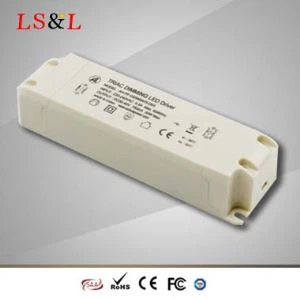
I’m here to help you find the right dimmable 12V DALI driver for your project. Whether you need a single unit for a small home theater, or 100 units for a large commercial installation, we can provide certified, flicker-free drivers that meet your needs. Reach out to our team to discuss your requirements, get a quote, or ask any technical questions you have about compatibility, power ratings, or installation.
LED Linear lighting System References:
- International Electrotechnical Commission. IEC 62386-101: Digital addressable lighting interface – Part 101: General requirements. 2014.
- Illuminating Engineering Society. IES LM-12-18: Measuring flicker in LED lighting products. 2018.
- National Electrical Manufacturers Association. NEMA LD-3-2020: Low-voltage LED power supplies and drivers. 2020.
Luxsky Lighting Co., Limited
Luxsky Lighting Co., Limited is one of the most professional led dali driver manufacturers and suppliers in China, also supports customized service with low price. Welcome to wholesale the high quality and energy saving led dali driver made in China here from our factory. Contact us for quotation.
Address: 1-6#, Tongfukang High-Tech Industrial Park, Ai’qun Road, Shiyan Town, Bao’an District, Shenzhen City, Guangdong, China
E-mail: sales@luxsky-light.com
WebSite: https://www.luxsky-light.com/
