If you’ve ever shopped for custom industrial components, you’ve probably run into that awkward moment when you need just one part, and the supplier’s minimum order requirement (MOQ) feels like a pointless hoop to jump through. As someone who’s spent the last 12 years as an anilox sleeve supplier—walking the trade show floors, troubleshooting press room fires, and sitting across from print managers who need parts yesterday—I get it. Anilox sleeves are critical workhorses in flexographic, rotogravure, and digital hybrid printing, so there’s no room for guesswork when it comes to their minimum order requirements. Today, I’m breaking down exactly what the minimum order for custom anilox sleeves actually is, why it exists, and how to work with it instead of fighting it. Anilox Sleeve
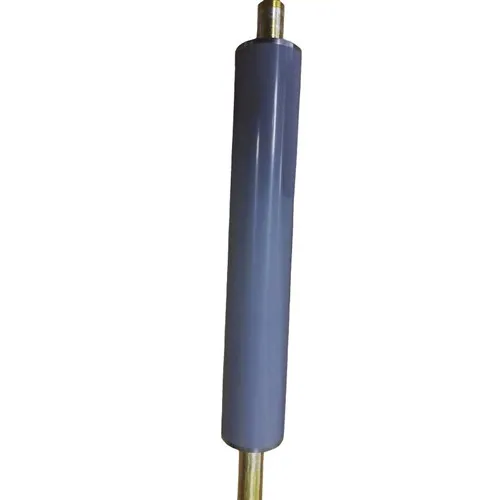
Let’s start with the basics, because too many folks skip this part. Anilox sleeves aren’t one-size-fits-all. They’re precision-engineeted cylinders with laser-etched cell structures that control how much ink (or coating) transfers to a printing plate or substrate. Custom sleeves aren’t off-the-shelf—they’re made to fit a specific press model, match exact line screens (LPI), cell volume, and sometimes special coatings for specialty inks like UV or solvent-based formulas. A custom anilox sleeve isn’t a commodity; it’s a custom tool, and like any custom tool, its cost and production timeline depend on factors that directly shape the minimum order.
When I get a call from a print manager asking, “What’s your MOQ for custom anilox sleeves?” my first question back is almost always, “Wait—are these sleeves for a new press setup, a replacement for a worn sleeve, or a test run for a new product line?” The answer changes everything. Let’s break down the core variables that define our minimum order, and what that number actually looks like for different scenarios.
First, the production process is the biggest driver of minimum order. Every custom anilox sleeve starts with a bare metal mandrel—usually aluminum, steel, or composite depending on the press specs. For small jobs, we use precision-machined mandrels to exact tolerances (within .0005 inches, to be specific) because a misaligned mandrel will throw off the entire cell structure and ruin the print run. Once the mandrel is ready, we move to the laser engraving stage. This is the heart of anilox production: a high-powered fiber laser etches thousands of tiny, uniform cells into the sleeve’s surface. The engraving process isn’t a one-minute job. For a single custom sleeve, we have to set up the laser’s parameters for line screen, cell depth, cell angle, and coating—then test a small sample to make sure the cell volume is accurate. That setup time? It’s the same whether we’re making one sleeve or ten. If we only make one, we’re paying for the same setup time as a bulk order, plus materials, quality control, and shipping. Passing that full cost on to a customer for a single sleeve would be unreasonable, which is where the minimum order comes in to balance our costs.
So what’s the actual number? For standard custom anilox sleeves—those with no special coatings, standard line screens between 100 and 800 LPI, and sizes that fit common press models like Mark Andy, Nilpeter, or W&H—our minimum order is 2 sleeves per custom specification. Wait, 2? Not 10? Not 5? That’s intentional, and here’s why: we’ve found that 2 sleeves hits a sweet spot for both our business and our customers. Most print operations keep one sleeve in use and a second as a spare, which reduces downtime if the first gets damaged or needs to be reconditioned. If a customer only needs one, we’ll still produce it, but we add a small “single-piece premium” to cover the extra setup cost that the minimum order was designed to spread out. I get pushback on that sometimes—last quarter, a small print shop owner called me upset because he only needed one sleeve for his entry-level Mark Andy press. He said, “I can buy off-the-shelf for cheaper, why would I pay more for custom?” The answer: off-the-shelf sleeves are generic, and if his press has a slightly non-standard run length (even just a few millimeters off), an off-the-shelf sleeve will slip or cause ink transfer issues. That single custom sleeve would have cost him $800 with the premium, vs. $500 for generic, but he’d have had to shut down his press for 3 days when it didn’t fit, costing him $2,000 in lost production. The single-piece premium isn’t a scam—it’s covering the cost of a custom tool that’s made just for his press.
Now, what about custom sleeves with special requirements? If you’re running UV-curable inks, specialty coatings, line screens over 800 LPI, or sleeves for ultra-large format presses (think corrugated box printing that’s 10 feet wide), the minimum order jumps to 4 sleeves. Why? Because these sleeves come with extra production steps. For example, UV-resistant anilox sleeves require a ceramic coating that’s applied in a clean room environment to avoid contamination. That clean room run is sized for multiple sleeves, so doing one would waste a full batch of coating material. Ultra-large sleeves also require specialized shipping crates that cost more, so spreading that cost over more sleeves keeps the per-unit price reasonable. I work with a corrugated print plant in Ohio that runs 12-color flexo presses for custom shipping boxes—they order 4 sleeves per custom spec, rotated out every 6 months, and that’s kept their downtime below 1% for 5 years.
Then there are the exception cases, the ones that break the mold. Let’s say you’re a startup testing a new product line, and you only need one sleeve for a 10,000-print test run. Or you’re a university engineering lab testing a new cell design, and you need a single custom anilox sleeve for a research project. We don’t turn those down—instead, we adjust our minimum order for prototype runs. For prototype custom sleeves, our minimum is 1, but we have strict timelines and fees (usually a 2-week lead time, vs. 1 week for standard orders) to cover the extra engineering and setup time for one-off designs. Last year, a packaging startup reached out to me 3 weeks before their product launch, needing a custom anilox sleeve for a new cold-seal ink. They only needed one, so we did a custom prototype for them, delivered it 4 days before launch, and they went on to land a $500k contract with a major grocery chain. That’s the whole point of flexibility—MOQs aren’t a hard rule to lock you in; they’re a framework to keep quality high and costs fair for everyone.
Now, let’s address the myths that float around about anilox sleeve minimum orders. I hear two all the time: “MOQs are just a way for suppliers to make more money” and “You can buy one custom anilox sleeve from anyone.” Let’s debunk the first myth first. Our MOQ exists because anilox production is labor and equipment intensive, not because we want to nickel and dime customers. If we charged full setup costs for every single sleeve, small print shops would be priced out of custom parts entirely, and they’re the backbone of this industry. As for the second myth—can you really buy one custom anilox sleeve? Sure, if you don’t care about quality. I’ve seen print shops buy single custom sleeves from overseas suppliers for $300, only to have the cell volume be off by 10% or the mandrel warp within a month. Those sleeves cost them more in downtime and reprints than if they’d ordered 2 sleeves from a reliable supplier at the standard MOQ.
So how do you work with our minimum order, instead of against it? Here are a few tips I’ve picked up over the years from working with hundreds of print operations. First, plan ahead. If you need new sleeves, order them when your current ones are still at 30% wear, not when they’ve failed and you need a replacement overnight. That gives you time to hit the MOQ without paying premiums. Second, combine orders if you can. If you need sleeves for two different press runs, ask if we can adjust the specs to fit a single batch—many times, we can match line screens or sizes to cut down on setup costs and meet your needs without extra inventory. Third, ask about reconditioning. Most worn anilox sleeves can be recoated and re-etched for half the cost of a new one, which lets you keep a spare without hitting a new MOQ every time.
Wait, let’s circle back to that small print shop owner I mentioned earlier. A month after we had that call, he came back—his generic sleeve had slipped and cost him a $1,200 rush reprint for a local bakery’s custom cake boxes. He ordered 2 custom sleeves, no premium, at the standard MOQ, and a month later he emailed me a photo of his press running smoothly, with a note that said, “That MOQ was the best investment I made all year.” That’s the value of understanding why MOQs exist, not just fighting the number.
At the end of the day, custom anilox sleeves are about reliability. A bad sleeve can ruin an entire print run, damage a press, and cost you more than the sleeve itself. Our minimum order isn’t a barrier—it’s a way to make sure we can deliver consistent, high-quality sleeves at a fair price, whether you’re a small local print shop or a global packaging manufacturer.

If you’re ready to place your first order, have questions about adjusting MOQs for prototype runs, or just need help figuring out how many sleeves you actually need for your next project, don’t hesitate to reach out to our team. We’ll walk through your specs, timeline, and budget to find a solution that works for you, no hoops required.
Chrome Anilox Roller References:
- “Anilox Sleeve Production: Precision and Process for Modern Printing” – Flexographic Technical Association (FTA) 2022 Annual Technical Report
- “MOQ Strategies for Custom Industrial Components” – Industrial Supply Association (ISA) 2023 Manufacturing Best Practices Guide
- “UV Anilox Sleeve Coating and Application Standards” – Gravure Association of America (GAA) 2021 Technical Bulletin
- “Cost-Benefit Analysis of Custom vs. Generic Anilox Sleeves for Small Print Operations” – Journal of Printing Science and Technology, Volume 69, Issue 2, 2022
Kunshan Hanhan Co., Ltd.
We’re well-known as one of the leading anilox sleeve manufacturers and suppliers in China. We warmly welcome you to buy high quality anilox sleeve made in China here from our factory. If you have any enquiry about cooperation, please feel free to email us.
Address: No. 1093, B Zone, No. 2 Xugongqiao Rd, Huaqiao Town, Kunshan City, Suzhou, Jiangsu, China
E-mail: info@kshhroller.com
WebSite: https://www.kshh-roller.com/
