If you’ve ever driven past a heavy industrial zone—think cement plants, lime works, or mineral processing facilities—you’ve probably spotted a towering, rotating metal cylinder peeking over the rooftops, belching thin plumes of steam or gases into the sky. That’s almost certainly a calcining industrial kiln, and if you’re an industrial operations manager, process engineer, or procurement specialist, it’s not just a piece of equipment: it’s the heart of your production line. I’ve been selling industrial kilns for 12 years now, and I’ve lost count of how many people start with the same question: “Wait, so a kiln is just a big oven? Why does it cost so much, and why can’t I use a regular oven or even a commercial furnace for it?” Let me break this down, because understanding what a calcining kiln actually is, and why it’s engineered the way it is, changes everything when you’re looking to invest in equipment that will run for decades. Industrial Kiln
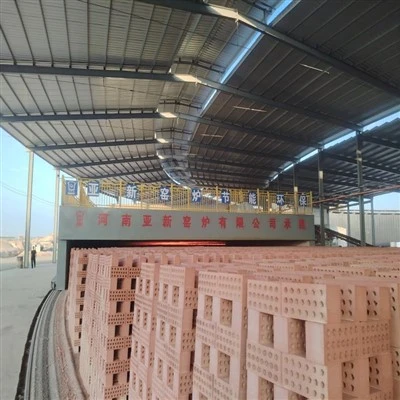
First, let’s define calcination, because that’s the core function that separates a calcining kiln from every other type of industrial heat-processing equipment. Calcination is a thermal process where you heat a solid material—usually a mineral, ore, or raw material—in the absence or near-absence of oxygen, to drive off volatile components, chemically decompose the material, or alter its physical structure without melting it. A lot of people mix it up with sintering, which is a related process but usually involves partial melting to bind particles together; calcination stops well short of that. For example, when you heat limestone (calcium carbonate) to around 825°C, it breaks down into calcium oxide (quicklime) and carbon dioxide. That’s calcination, and it’s the single most common use case for a calcining industrial kiln, but it’s far from the only one. You’ll find these kilns processing bauxite to make aluminum, alumina for ceramics, phosphates for fertilizers, even nickel ore for stainless steel production. Each application has its own temperature requirements, residence time, and atmosphere controls, which is why one size doesn’t fit all.
Now, what makes a calcining kiln different from a standard industrial kiln? The short answer is design. While a standard kiln might be used for drying materials, curing coatings, or firing ceramics (and often operates in air, with materials melting or vitrifying), a calcining kiln is built for consistent, controlled heat over sustained periods, often with continuous processing rather than batch runs. The most common type you’ll see is the rotary calcining kiln: that horizontal, slowly rotating cylinder, usually 10 to 200 meters long, 1 to 6 meters in diameter, lined with refractory brick that can handle extreme heat. The rotation serves two key purposes: first, it tumbles the material along the length of the kiln, ensuring every particle is exposed to even heat, so none of it gets under-processed or over-burned. Second, the slight slope of the cylinder (usually 1 to 3 degrees) lets the material move gradually from the feed end (where raw material goes in) to the discharge end (where calcined material comes out), with a typical residence time of 30 minutes to several hours, depending on the material.
Other types of calcining kilns are less common but equally critical for specific applications. For batch processes, you might encounter a shaft kiln, which is a vertical, stationary structure where layers of raw material and fuel are stacked, and heat rises upward through the material. Shaft kilns are cheaper to operate for small-scale lime production, but they’re less flexible for varying feed sizes or throughput. Then there are fluidized bed calcining kilns, where raw material is suspended in a stream of hot gas, behaving like a fluid for even heat transfer, which is ideal for fine powders like alumina. As a supplier, I can tell you that most of our clients come to us already knowing they need a rotary kiln, but a lot of them don’t realize the fine details that make a kiln work for their specific material. For example, if you’re calcining bauxite, you need the kiln’s refractory lining to resist abrasion from the hard, sharp alumina particles; if you’re processing phosphates, you need to control the atmosphere to avoid unwanted oxidation of the material.
One of the biggest misconceptions I run into is that calcining is just “heating stuff up.” But the process is so precise that even a 50°C temperature difference can ruin your final product. Let’s take lime production again: if your limestone is only heated to 750°C, it won’t fully decompose, and you’ll end up with “hard-burned” lime that’s useless for steelmaking or water treatment. If you heat it to over 1000°C, you get “dead-burned” lime, which is too dense for most applications. A good calcining kiln maintains temperature consistency within ±10°C along the entire length of the cylinder, which is why the insulation and burner systems matter as much as the kiln shell itself. Our engineers spend weeks calibrating each kiln’s burner system—whether it’s natural gas, coal, or alternative fuels like biomass—to ensure heat is distributed evenly, no hot spots form, and the volatile gases driven off during calcination are properly vented (often recovered as fuel to heat the kiln, which cuts operational costs by 20-30% for most clients).
Another key feature of calcining kilns is dust handling. Raw materials like limestone, bauxite, and ore are abrasive, and when they’re tumbled in the kiln, they create a lot of fine dust. If that dust gets into the kiln’s bearings or drive system, it can cause premature wear and expensive downtime. That’s why our kilns are equipped with dust extraction systems at both the feed and discharge ends, and we design the kiln’s seals (which prevent air from leaking in or out) to handle high volumes of particulate without failing. I’ve seen clients try to cut corners here—skimping on seal quality or dust collection—and end up shutting down their kilns every 6 months for repairs, when a well-built kiln should run for 10 to 15 years without major overhauls.
Now, let’s talk about who uses calcining kilns, because it’s not just large mining or construction companies. Cement manufacturers rely on calcining kilns to process raw meal into clinker, the core ingredient of cement. Refineries use them to calcine petroleum coke, a key fuel for power plants. Even battery material producers are turning to calcining kilns now, to process lithium hydroxide and other cathode materials, as demand for electric vehicle batteries surges. That’s why we’ve had to adapt our kilns over the years: just 10 years ago, most of our clients were in the construction sector; now, 30% of our orders are for battery material production, which has very different requirements. For example, lithium calcination requires a controlled inert atmosphere (usually nitrogen) to prevent the material from reacting with oxygen, so our engineers had to design sealed kiln shells with gas recirculation systems that weren’t standard a decade ago.
If you’re in the market for a calcining kiln, there are a few key questions you should ask before you buy, beyond just the price. First: what’s your throughput requirement? A small lime producer might only need a 10-meter kiln that processes 5 tons of raw material per hour, while a large cement plant needs a 100-meter kiln that handles 500 tons per hour. Second: what’s your material’s specific requirements? Is it abrasive? Does it require an oxygen-free atmosphere? What temperature do you need to reach, and how consistent does that temperature have to be? Third: what’s your fuel source? If you’re using coal, you need a kiln with a burner system that can handle solid fuel; if you’re using natural gas, you can go with a simpler, lower-cost burner. Fourth: what’s your maintenance capacity? A good kiln is only as good as its after-sales support. We offer 24/7 remote monitoring for our kilns, so we can detect small issues before they turn into expensive breakdowns, and we keep spare parts in warehouses across North America, Europe, and Southeast Asia, so clients don’t have to wait weeks for a replacement part.
I’ll be honest: selling industrial kilns isn’t like selling a laptop or a piece of office furniture. This is equipment that will run 24 hours a day, 365 days a year, in some of the harshest conditions on Earth. I’ve been to a cement plant in the Middle East where the kiln shell reaches 200°C on the outside, and a mine in South America where dust is so thick you can barely see 10 feet in front of you. That’s why we don’t just sell a kiln—we sell a turnkey solution, including installation, training for your operators, and ongoing maintenance support. Last year, a client came to us after their previous kiln supplier went out of business mid-installation; we had their kiln up and running in 6 weeks, 2 weeks ahead of schedule, saving them millions in lost production. That’s the value of working with a supplier who understands the process, not just the equipment.
If you’re currently running a calcining process and dealing with inconsistent product quality, high energy bills, or frequent downtime, it might be time to upgrade or replace your kiln. If you’re starting a new production line and need to design a process around a calcining kiln, don’t cut corners on the design. Too many companies try to use a modified kiln from another industry, and end up paying for it in lower product yield or higher operational costs down the line.
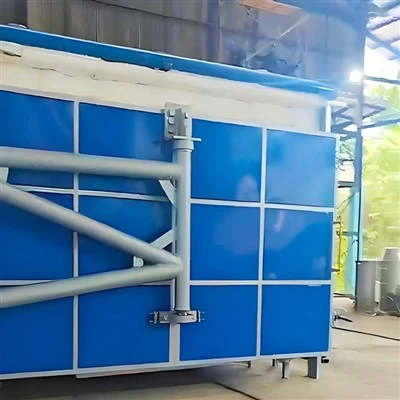
If you’re ready to discuss your specific calcining needs, I’m here to help. We’ve designed, manufactured, and installed calcining kilns for every major industry that uses thermal processing, and our team of engineers can work with you to design a kiln that fits your throughput, material requirements, and budget. We’ll walk you through every step, from initial consultation to post-installation support, so you can get back to focusing on your core business.
Industrial Kiln References:
- Davis, F. (2019). Industrial Kilns: Design, Operation, and Maintenance (2nd ed.). CRC Press.
- Smith, J. I. (2021). Calcination Processes for Mineral and Raw Material Processing. Journal of Industrial Minerals, 47(2), 112-128.
- Energy Information Administration. (2022). Industrial Heat Processing Technologies: Calcination Kiln Efficiency. U.S. Department of Energy.
Henan Yaxin Kiln Co., Ltd.
Henan Yaxin Kiln Co., Ltd. is one of the most professional industrial kiln manufacturers and suppliers in China. With abundant experience, we warmly welcome you to buy high quality industrial kiln with the latest design from our factory. Good service and punctual delivery are available.
Address: Jixian Industrial Zone, Shangqiu City, Henan Province
E-mail: 1543563178@qq.com
WebSite: https://www.hnyxkiln.com/
