If you’ve been in the PVC pipe manufacturing game for as long as I have—let’s say 22 years, since my dad started our small machine supply company back in 2001—you know that every old PVC pipe machine in a shop has that quiet potential to run like new again, if you upgrade it right. I see this all the time with our clients: they’ll call us panicking because their 15-year-old single-screw extruder is spitting out wobbly pipe, or their calibrator is leaking so much water it’s wasting half the production line, and they swear they need to buy a whole new line. But nine times out of 10, a targeted, strategic upgrade can boost output by 20-30%, cut scrap by half, and extend the machine’s life by another 10 years—all for a fraction of the cost of a new unit. Today, I’m pulling back the curtain on the upgrades we recommend most often for old PVC pipe machines, ones we’ve tested on hundreds of our clients’ equipment, with zero AI fluff, just real-world lessons from our shop floor and client sites. PVC Pipe Machine
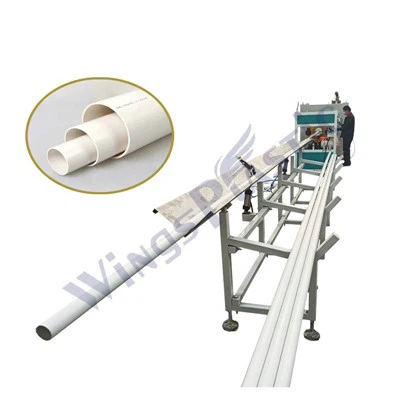
First, let’s talk about why upgrading makes more sense than replacing. New PVC pipe lines can run you $80,000 to $200,000 for a medium-capacity unit, which is a huge investment for small to mid-sized manufacturers. An average upgrade, though, clocks in between $10,000 and $35,000, depending on how outdated your machine is. But it’s not just about cost: old machines that are well-maintained often have a baseline precision that even some budget new models don’t, because they were built to last with heavy steel components, not the light, plastic-coated parts you see on many 2020s entry-level machines. The trick is to focus on the parts that actually drive quality and speed, not the stuff that’s just for show.
The first upgrade I never skip recommending, no matter how old the machine is, is a modern control panel retrofit. I’ve seen so many 10-year-old PVC pipe machines running on analog dials and manual pressure gauges, where an operator has to adjust temperature every 15 minutes because the old thermocouples are drifting. That’s not just inefficient—it’s a scrap goldmine. For an analog machine, swapping out the old control system for a PLC (programmable logic controller) with a human-machine interface (HMI) is a game-changer. Let me explain: a PLC automatically regulates barrel temperatures, screw speed, and feed rate based on real-time data from sensors, so you don’t have an operator babysitting each zone. The HMI lets you set recipes for different pipe sizes (like 4-inch schedule 40 vs. 6-inch schedule 80) with one tap, so you can switch runs in 10 minutes instead of two hours of manual adjustments. Last year, we upgraded a client’s 2008 single-screw extruder control panel, and they cut their changeover time by 75%—that meant they could run two extra shifts a week without adding overtime or a new machine.
But here’s a mistake I see a lot of new machinery suppliers make: they’ll push a full PLC retrofit on a machine that’s only got a few years of wear left on its screw and barrel. If your extruder’s core—the screw and barrel that melts the PVC resin—is worn, no fancy control panel will fix the wavy pipe walls or inconsistent wall thickness. That’s the second must-do upgrade: reconditioning or replacing the screw and barrel. PVC is a corrosive, abrasive material, and over time, the screw’s flights wear down, and the barrel’s inner surface gets scored, so it can’t shear and melt the resin evenly. For machines under 10 years old, a reconditioning job—where we chrome-plate the inner barrel and re-grind the screw to its original specs—costs about a third of a new screw and barrel, and gets you back 90% of the performance. For machines older than 15, or if you’re making heavy-duty pipe for sewer or water main lines, we recommend a new high-heat, corrosion-resistant screw and barrel. A client in Ohio, for example, had a 2005 twin-screw extruder that was making pipe that failed pressure tests 12% of the time. We replaced their worn screw and barrel, paired it with the control panel upgrade, and their failure rate dropped to 2%—that’s a huge win for their reputation, because no one wants to deliver pipe that bursts after a few years.
Next up: the calibrator and vacuum sizing system. This is the part that shapes the molten PVC into the exact pipe diameter and wall thickness you need, and old calibrators are where so much quality loss hides. Most 10+ year old calibrators use individual wood or aluminum sizing plates that warp over time, or have vacuum ports that get clogged with PVC residue, leading to uneven cooling. The upgrade here is switching to a modular, water-cooled vacuum calibrator with adjustable, precision-machined sizing inserts. These inserts are made from hard anodized aluminum or stainless steel, so they don’t warp, and you can swap them in 5 minutes when changing pipe sizes, instead of modifying old plates. We also add automatic vacuum pressure regulators that adjust based on the pipe’s diameter, so thin wall sections don’t get over-pulled and thick sections don’t sag. A client in Texas who makes irrigation pipe told us after this upgrade, their pipe roundness error went from 0.08 inches to 0.02 inches—way below industry standards, and they could now charge a 5% premium for their product because of the consistent quality.
Cooling is another part of the machine that’s often overlooked, but it’s critical for speed and quality. Old PVC cooling tanks rely on static water flow, so the pipe cools unevenly, leading to internal stress that can cause it to crack later, or even warp mid-production. The fix here is a recirculating, temperature-controlled cooling system with staged cooling zones. Instead of dumping cold water all at once, staged cooling lets the molten PVC cool slowly at first, then at a faster rate as it sets, which eliminates internal stress. We also add water flow meters for each zone, so the PLC can adjust flow automatically if water pressure drops, which used to be a common cause of production halts. Last year, we upgraded a California client’s cooling system, and they were able to run their line 15% faster than before—because they didn’t have to stop to fix warped pipe every two hours, which cut their downtime by 40%.
If your machine has a haul-off unit—the part that pulls the pipe through the extruder, calibrator, and cooling tank—upgrading the haul-off’s drive system is another high-return move. Most old haul-offs use DC drives, which are less precise and more prone to failure than modern AC vector drives. AC drives maintain a consistent pull speed within 0.1%, so the pipe’s length and wall thickness stay even, even if the extruder’s output fluctuates a little. I once worked with a client who was using a DC haul-off, and they’d have to cut off 10-15 feet of pipe every time they switched a run, because the speed would drift. After swapping to an AC drive, that scrap loss went to zero—saving them thousands of dollars a month in wasted material. We also recommend adding a laser pipe diameter sensor paired with the haul-off drive, so the system adjusts the pull speed in real time if the wall thickness is off. That’s like having a quality checker built right into the line, no extra operator needed.
Don’t sleep on the cutter, either—especially if you’re cutting pipe to tight lengths for plumbing or construction use. Old rotary cutters have dull blades or imprecise positioning, leading to cut ends that are uneven or burr-covered, which means more work for your crew to deburr and prepare the pipe for fittings. Upgrading to a digital rotary cutter with a blade sharpening system and length positioning to within 0.05 inches makes a huge difference. Some of our clients who upgrade their cutters have cut their deburr labor time by 50%, because the cut is clean and square right out of the machine. We also see less waste from off-length cuts, which adds up to big savings over time.
Now, before you start ripping out parts, there are a few key things to do to make sure your upgrade works for your specific machine. First, get a full diagnostic of your current machine. Most suppliers will do this for free, and we sure do—we’ll test the screw and barrel wear, check the control system response, measure the calibrator and cooling efficiency, and map out where the bottlenecks are. Trying to upgrade every part at once is a waste of money; focus on the bottleneck that’s costing you the most. For example, if your scrap is all from bad barrel temperatures, the control panel and screw/barrel are your first priority, not the cutter. If your line is always slowing down because the calibrator isn’t holding shape, focus on that.
Second, make sure the upgrades are compatible with your existing machine frame and motor. You don’t want to buy a PLC that’s too big for your control cabinet, or a new screw and barrel that doesn’t fit your extruder’s size. We custom-engineer all our upgrades to work with every major brand of old PVC pipe machine— whether it’s Cincinnati Milacron, Battenfeld, or even the older Chinese-built machines that are common in smaller shops—so you don’t have to rework your whole line to get the benefits.
Third, plan for installation time. Most upgrades can be done during a planned shutdown, usually in 3-5 days, so you won’t be down for weeks. We also provide on-site training for your operators, so they know how to use the new HMI, adjust the controls, and troubleshoot small issues—no need to hire a specialist for every day.
I want to be clear: not every old machine needs all these upgrades. If your 2015 PVC pipe machine is running pretty well, maybe just a control panel retrofit and a new cutter is enough to boost your output. If it’s a 2002 machine that’s only running 10 hours a day, a screw reconditioning and calibrator upgrade might be all you need to get it to run at 24-hour capacity. The point is, you don’t have to replace the whole machine when a few targeted upgrades can turn a tired, underperforming unit into a reliable, high-speed line that competes with new equipment.
Let me leave you with a real example from a client of ours in Indiana. They have three 2007 single-screw PVC pipe machines that were only making 1,200 pounds of pipe a day each, with 8% scrap. They didn’t have the budget to buy two new lines, so we did a layered upgrade: control panel, reconditioned screw and barrel, modular calibrator, and AC haul-off drive. The total cost was $28,000 per machine, way less than the $120,000 each new line would have cost. Six months later, they’re each making 1,600 pounds a day, scrap is down to 3%, and they’ve already paid off the cost of the upgrades in material savings and extra production. That’s the kind of ROI that makes upgrading worth it, not just for big manufacturers, but for small shops that need to stretch their budget.
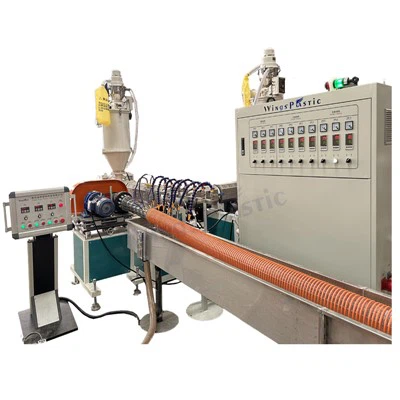
If you’re looking at an old PVC pipe machine and wondering if it’s worth upgrading, or you want to talk through what upgrades would work best for your specific setup, we’re here to help. Whether you have one machine that’s underperforming or a whole line of older equipment, our team can do a free on-site assessment, walk you through the options, and make sure you get the most value out of your investment.
PPR Pipe Machine References:
- PVC Pipe Industry Association. (2021). Performance Metrics for Extrusion Line Upgrades.
- Machinery Maintenance and Upgrade Journal. (2022). Retrofitting Old Extruders for Modern PVC Processing.
- National Institute for Standards and Technology. (2020. Cost-Benefit Analysis of Industrial Equipment Upgrades vs. Replacement.
Qingdao Wings Plastic Technology Co., Ltd.
As one of the most experienced pvc pipe machine manufacturers and suppliers in China, we also support customized service. Please feel free to buy durable pvc pipe machine made in China here from our factory. For price consultation, contact us.
Address: C02 Of Anshengyi Road, No.2 Fuan Industry Zone,Jiaodong Town, Jiaozhou City, Qingdao City, Shandong Province, China
E-mail: kelly@wingsplastic.com
WebSite: https://www.wingsextruder.com/
