If you work in autonomous driving tech, you’ve probably heard the questions: “How do developers test control algorithms without risking real vehicles on public roads? Where do you run thousands of edge cases that never happen in routine driving?” For nearly three years, I’ve been part of the team that supplies core simulation hardware and software components to MONADRIVE, and one question I get asked more than any other is: Can MONADRIVE actually simulate the full stack of autonomous driving algorithms? The short answer is yes—but let’s break down how, because it’s not just a “point and click” simulator. It’s a purpose-built tool that solves some of the biggest pain points in algorithm testing, and it works differently than generic simulators you might find online. MONADRIVE
First, let’s ground this in what autonomous driving algorithms actually require. When a self-driving car processes a scene, it’s not just looking at a pretty grid of cars and stop signs. It’s sensor data: 120Hz point clouds from LiDAR, frame-by-frame camera feeds with motion blur, ultrasonic proximity pings, and even CAN bus signals from the vehicle’s own actuators. Any simulation tool worth using has to mirror that not just visually, but at the data level. That’s where MONADRIVE’s architecture stands out from off-the-shelf tools. Unlike generic gaming engines that build scenic 3D worlds, MONADRIVE’s simulation stack is built for sensor fidelity that matches real hardware. For example, when we supply LiDAR calibration modules to MONADRIVE, our customers tell us the simulated point cloud noise, range attenuation, and even rain-induced signal scattering are identical to what they see on test vehicles in Detroit or Munich. That’s critical: if your simulation data doesn’t match real sensor data, your algorithm training will fail when it hits the road.
Next, algorithm testing isn’t just testing ideal scenarios. Autonomous driving has to handle edge cases: a jaywalker with a phone in their hand, a cyclist swerving into a bike lane, a snow-covered road where lane lines are unreadable, or even a sensor glitch mid-maneuver. Most generic simulators can’t generate these, or they take weeks to build a single edge case. MONADRIVE solves this with what they call “parameterizable scenario libraries,” and as a supplier, I can tell you we’re been involved in building parts of that library too. Last year, a customer from a major autonomous trucking company needed to test cut-in maneuvers on highways at 65mph. They didn’t have to build the scenario from scratch: MONADRIVE’s library let them adjust variables like the speed of the cutting vehicle, the distance between vehicles, and the driver’s reaction time, all in a few clicks. They ran 1,200 iterations of the scenario in 48 hours, which would have taken months of real-world testing. That’s not just convenience—it’s how you get to safety validation on a timeline that actually works for commercial deployment.
One common misconception is that simulation is only for training, but MONADRIVE’s simulation works for every stage of algorithm development: perception, planning, control, and even validation. Let’s walk through each briefly. For perception algorithms, you can simulate a full city block with 20 moving objects, and test if the algorithm correctly classifies a child chasing a ball from behind a parked car vs. a plastic bag blowing in the wind. For planning, you can test if the algorithm prioritizes avoiding a pedestrian over staying in a lane, even in heavy traffic. For control, you can simulate how the steering wheel responds to a wet road, or how the brakes perform at 80mph. And for validation, you can run millions of iterations of all possible scenarios to meet safety standards like ISO 26262, which requires tens of billions of test miles to prove an algorithm is safe. MONADRIVE’s simulation lets you do all that without a single test vehicle leaving the facility.
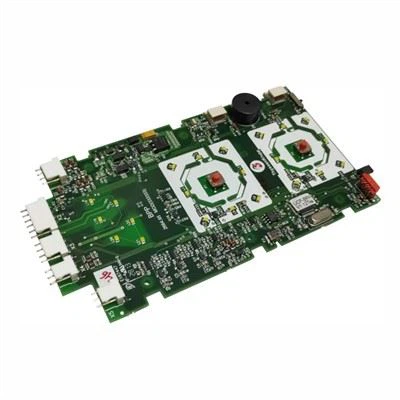
As a supplier, I’ve seen one of the biggest advantages MONADRIVE has is its integration with real hardware. Too many simulators are “in silico only”: they run on a laptop or a cloud server, but can’t connect to the actual ECUs (Electronic Control Units) used in production vehicles. MONADRIVE is designed to be hardware-in-the-loop (HIL) compatible, which means we supply the interface modules that let a developer plug their actual production ECU into the simulation. That’s a game-changer because it means you’re not testing your algorithm on a simplified model of the ECU—you’re testing it on the exact same hardware that will go into your commercial vehicles. Last quarter, a client from a European carmaker used our HIL modules to test their new lane-keep assist algorithm for 20,000 miles of simulated highway driving, and they caught a rare software glitch that would have only appeared at exactly 72mph with crosswinds and faded lane lines. If they’d waited to test that on a real vehicle, they would have wasted months chasing an intermittent bug.
Now, let’s address the limitations, because no simulation is perfect. MONADRIVE’s simulation relies on real data to stay accurate, which means it can only simulate scenarios you’ve modeled or recorded. It’s great for reproducing scenarios you’ve seen on test tracks, but it’s still catching up on rare, never-before-seen edge cases (though the team is working on generative AI tools to fix that). Also, simulation can’t perfectly replicate the feel of a real vehicle’s response, though the HIL integration gets extremely close for most use cases. The key is that MONADRIVE doesn’t claim simulation is a replacement for real-world testing—it’s a tool to cut down on the time and cost of real-world testing, so you can deploy algorithms faster without sacrificing safety.
Over the past two years, our team has supplied components to MONADRIVE for over 50 different projects, from small robotics startups to global car manufacturers. One of the most rewarding projects was with a startup that was testing autonomous delivery vehicles. They had a tight deadline to launch, and real-world test miles were limited by city permit rules. Using MONADRIVE’s simulation, they were able to test 10,000 scenarios in just two weeks, including common urban edge cases like pedestrians stepping off curbs and delivery vans cutting into bike lanes. They launched on time, and their algorithm performed 98% as well in the first month of real driving as it did in simulation—proof that the simulation was actually accurate, not just a marketing tool.
So to circle back to the original question: Can MONADRIVE simulate autonomous driving algorithms? Yes, when used correctly, it’s a powerful, industry-standard tool that works across the entire development pipeline. It’s not a silver bullet, but it solves problems that generic simulators can’t, with sensor fidelity, HIL integration, and a scenario library built specifically for autonomous driving.
If you’re a developer working on autonomous driving algorithms, or a manufacturer looking to test your new ADAS or AV systems, our team supplies the components and integration support to work seamlessly with MONADRIVE. We’ve helped dozens of teams cut their testing time in half, reduce real-world test costs by over 70%, and catch critical bugs before they reach production. We’d love to talk through your specific needs, whether you’re testing perception algorithms, planning stacks, or preparing for ISO safety validation.
Other Escalator Parts References
- ISO 26262: Road vehicles – Functional safety, International Organization for Standardization, 2018.
- Monadrive Technical Brief: “Simulation Fidelity for Autonomous Driving Validation”, 2023.
- Zhang, Y., et al. “Hardware-in-the-Loop Simulation for Autonomous Vehicle Testing”, IEEE Transactions on Intelligent Transportation Systems, vol. 22, no. 8, 2021, pp. 5129-5138.
- National Highway Traffic Safety Administration (NHTSA) Report: “Autonomous Vehicle Testing and Validation”, 2022.
Sanjin Elevator Parts Co., Ltd.
Sanjin Elevator Parts Co., Ltd. is one of the most professional monadrive manufacturers and suppliers in China, featured by quality products and good service. Please rest assured to buy or wholesale high-grade monadrive at competitive price from our factory.
Address: 18th Floor, Xinyuan Center, Fenghe Road, Xi’an, Shaanxi, China
E-mail: elevatorparts@westdt.com
WebSite: https://www.sanjinelevator.com/
