Hey there, if you’ve ever fumbled with a microwave door button, a phone’s power switch, or a kid’s toy that needs a firm tap to turn on, you’ve used a push button switch. Most people just grab one without thinking about what’s actually inside it—let me tell you, as a push button switch supplier, I get asked this question all the time: what are these things even made of? It’s not just plastic, I promise. There’s a whole mix of materials that make sure these switches work reliably, last for thousands of presses, and don’t fail when you need them most. Push Button Switch

Let’s start with the part you touch directly: the button itself. It’s not just any random plastic. Most of the time, we use thermoplastic elastomers (TPE) for soft-touch buttons, right? Wait, sometimes people call them silicone, but TPE is different—silicone works too, but TPE is cheaper and easier to mold in complex shapes. Why pick either? Because they’re grippy, they flex with every press, and they don’t get brittle if the switch sits in a hot garage or a cold workshop for years. If you’ve ever pressed a button that feels too hard or too squishy, that’s the material difference. For buttons that need a little more structure, like the ones on industrial control panels or heavy-duty equipment, we go with reinforced thermoplastics—think ABS or polycarbonate (PC) blended with glass fiber. That makes the button rigid enough to handle hundreds of thousands of presses without cracking, even if someone slams it on by accident. I’ve seen too many cheap switches where the button snapped off after a month, and 9 times out of 10, that was bad plastic.
Next up, the base and housing. This is the part that holds everything together, mounting to a circuit board or a panel. Again, it’s thermoplastic, but not the soft stuff here. Most common is ABS for general-purpose switches—cheap, moldable, and resistant to basic oil, dust, and mild chemicals. But for environments that are tough, like medical devices, outdoor gear, or food processing equipment, we switch to polycarbonate (PC) or even nylon. PC is super impact-resistant; drop a switch made of PC from a foot high, it won’t crack. Nylon is great for withstanding chemicals like cleaning agents, which is why it’s popular in commercial kitchens. Some waterproof push button switches we make even use a thermoset plastic like Bakelite for the housing—Bakelite is old-school, but it’s heat-resistant, so it won’t melt if the switch is near a heat source, like a car dashboard.
Now the guts of the switch, the contact area where the actual circuit closes. This is where the magic happens, and the materials here are way more specific than plastics. There are two main types of contacts, right? One is metal domes—tiny, thin discs of stainless steel or phosphor bronze. When you press the button, the dome pops up and makes contact with the circuit board below. Stainless steel is more durable, good for heavy industrial use, but phosphor bronze is a little softer, gives that satisfying “click” feel that people love in a switch. The other type is the contact pad itself, usually made of silver. Wait, not solid silver, that’s too expensive—it’s usually silver alloy, sometimes mixed with copper or nickel to make it harder. Why silver? It’s the best conductor of electricity, way better than copper for small, low-voltage circuits like the ones in phones or microwaves. If we used a cheaper metal like iron, it would rust or corrode really fast, and the switch would stop working after a few months. For high-current switches, like the ones in car starters or power tools, we use copper alloy contacts because they can handle more electricity without overheating.
Oh, and don’t forget the springs! Most push button switches have a spring that makes the button pop back up after you press it. What are springs made of? Spring steel, usually stainless steel for general use, or music wire for tighter, more responsive springs. If the spring is too weak, the button feels mushy and doesn’t click properly; if it’s too strong, pressing it takes way too much effort. We test every batch of springs to make sure they last at least 100,000 presses—some of our heavy-duty ones go up to 1 million. I’ve had a client tell me their old switches failed after 10,000 presses, and we found out they were using cheap springs that wore out fast. That’s the difference between a good switch and a dud.
Wait, what about waterproof seals? A lot of people don’t think about this, but if a switch is going to be outside or near water, it needs a seal to keep dust and moisture out. Those seals are usually made of silicone rubber, sometimes EPDM (ethylene propylene diene monomer) for extreme cold. Silicone is flexible, stays rubbery even in freezing temperatures, and doesn’t break down from sun exposure. We make a lot of IP67-rated switches for outdoor lighting and farm equipment, and the seal is non-negotiable there—if the seal is bad, water gets in, the contacts rust, and the switch dies. I’ve had to replace hundreds of switches that failed because the seal was made of cheap rubber that cracked after a year in the sun.
Let me also mention the circuit board, even though it’s not part of the switch itself—wait, no, the contact area is on the PCB, but the switch’s internal connectors are made of metal too. Those connectors are usually brass, plated with gold or tin to prevent corrosion. Gold is a better conductor, so we use gold plating for medical or aerospace switches where even a tiny bit of resistance can cause issues. Tin is cheaper, works fine for general consumer products like TVs or toasters.
Now, why does all this matter? As a supplier, I hear a lot of clients say “just give me a cheap push button switch” and then complain when it fails. But the materials you choose directly impact the lifespan, reliability, and performance of the switch. For example, a switch made with TPE and phosphor bronze domes is perfect for a remote control—soft to press, lasts 50,000 presses, cheap enough to mass produce. But that same switch would be terrible for an industrial conveyor belt button, which needs to handle 100,000 presses a year, resist oil and dust, and work in -20°F weather. For that, you need polycarbonate housing, stainless steel domes, and EPDM seals.
I’ve seen too many competitors cut corners on materials to lower the price. They use regular plastic instead of glass-reinforced nylon, cheap iron contacts instead of silver alloy, weak springs that wear out in a year. The result? The client has to replace switches constantly, which ends up costing more in the long run. That’s why we’re strict about material selection—we don’t use cheap stuff just to undercut others. Every material we pick is tested to make sure it meets the requirements for the application.
Wait, let’s talk about some edge cases too. For switches that go into medical devices, we use materials that are biocompatible—so if someone’s skin touches the button, it doesn’t cause irritation. That usually means medical-grade TPE or silicone, not the regular stuff. For food processing equipment, we need materials that are FDA-compliant, so they don’t leach chemicals into food. Nylon and certain TPEs pass those tests, which is why we use them there. For high-temperature environments, like car engine compartments, we use heat-resistant thermoplastics and stainless steel, because regular ABS would melt at 200°F.
A lot of people also ask about lead-free materials these days. Most of our switches are lead-free now, because of regulations in Europe, the US, and other countries. We adjust the plating on contacts and the plastic resins to meet RoHS standards, so our switches are safe for consumer and industrial use without harmful chemicals. That’s a big deal now—clients don’t want to deal with fines for using non-compliant materials.
So, next time you press a button and it feels solid, clicks perfectly, and works for years, you can thank the mix of materials we use: soft TPE or silicone for the button, rigid ABS or polycarbonate for the housing, silver alloy contacts for conductivity, stainless steel springs for durability, and silicone seals for protection. It’s not rocket science, but it takes careful selection and testing to get right.
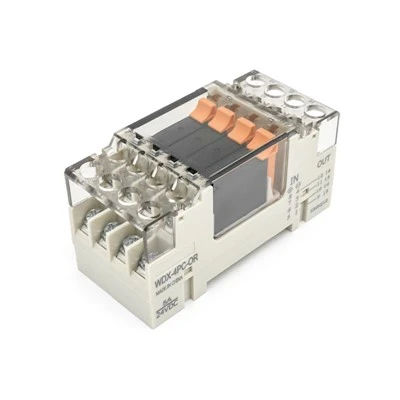
If you’re in the market for push button switches—whether you need a few hundred for a consumer product, or thousands for industrial equipment—we’ve got you covered. We work with all kinds of applications, from small electronics to heavy machinery, and we can help you pick the right materials to fit your needs, budget, and environment. No more guessing if a switch will fail after a month—we test every batch to make sure it’s up to par. Hit us up to talk through your project, share your requirements, and get a quote that works for you.
Relay Module References:
- "Understanding Thermoplastics for Electrical Components", Plastics Engineering Institute, 2022.
- "Push Button Switch Materials and Performance Standards", Industrial Electrical Manufacturers Association, 2021.
- "Corrosion Resistance of Electrical Contact Alloys", Journal of Electronic Materials, Vol. 50, No. 3, 2021.
- "Seal Materials for IP-Rated Switches", International Organization for Standardization (ISO) 60529 Technical Report, 2020.
Zhejiang Weide Electric Co., Ltd.
Zhejiang Weide Electric Co., Ltd. is one of the most professional push button switch manufacturers and suppliers in China, featured by quality products and low price. If you’re going to buy the newest push button switch, welcome to get free sample from our factory. We also accept customized orders.
Address: No. 555, South Binhe 2nd Road, Yueqing City, Zhejiang Province, China
E-mail: zjwdir@wdirele.com
WebSite: https://www.chweide.com/
