If you’ve ever stared at a server rack humming in a data center, a high-end gaming PC running a 16-core processor on full load, or a power inverter keeping a solar farm online through the hottest summer afternoon, you’ve been watching heat do its worst. Left unchecked, excess heat damages semiconductors, cuts component lifespans, and even causes catastrophic failures. That’s where liquid cooled heat sinks come in—and as a heat sinks supplier who’s spent 12 years designing, testing, and shipping these parts for everything from industrial robotics to aerospace, I’ve seen how choosing the right one turns a fragile, overheating component into a reliable workhorse. Heat Sinks
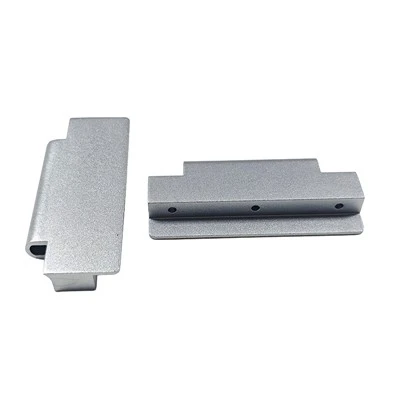
Let’s start with the basics, because too many folks mix up liquid cooled heat sinks with general liquid cooling systems, and that’s a costly mistake. A standard air-cooled heat sink is a block of aluminum or copper fins that pulls heat off a component and blows it away with a fan. A liquid cooled heat sink (sometimes called a cold plate heat sink, for good reason) is a modified version of that: it adds a sealed channel network inside the metal block that a specialized liquid flows through, instead of air. That liquid acts as a much more efficient heat carrier than air, moving excess heat away from the source 10 to 20 times faster than air can handle. It’s not just “water in a metal block,” either—there’s a lot of engineering that goes into making these parts work consistently, especially in demanding environments.
Let’s break down how it works step by step, because when I walk a customer through our design process, I don’t skip this part. First, the heat sink mounts directly to the component that’s generating heat—usually a CPU, GPU, power module, or LED array. Most of our liquid cooled heat sinks use thermal interface material (TIM) between the component and the sink itself; this fills in tiny gaps and roughness that air can’t, so 95% of the component’s heat transfers to the sink’s metal block, not lost to empty space. Next, the sealed internal channels (we machine them via friction stir welding or CNC milling, depending on the application) carry a coolant—usually a mix of deionized water and corrosion inhibitor, or dielectric fluid for high-voltage systems—through the block. As the liquid flows, it absorbs heat from the sink’s metal, and that warm liquid is then pumped to a radiator, where a fan blows air over the radiator’s fins to cool the liquid back down, sending it right back to the heat sink to repeat the cycle. The whole loop is closed, too, which means no leaks, no evaporation, and consistent performance over thousands of hours.
What makes these worth the extra cost and complexity? Air cooling works fine for small, low-power components, but once you’re dealing with anything over 150W of continuous heat, liquid cooled heat sinks are non-negotiable. I remember a client who made industrial laser diodes a few years back—they were using air cooled sinks and could only get 80W of output before the laser would throttle to avoid overheating. Swapping in our liquid cooled heat sink, with custom channels designed to handle the high heat flux near the laser’s emission point, let them run at 200W continuously, doubling their production capacity without changing anything else. That’s the kind of gain that makes engineers stop and ask, “Wait, how does this actually work for my setup?”
Now, let’s talk about the different types of liquid cooled heat sinks, because not every one is made the same—this is where my team’s experience as a supplier matters, because we build for specific use cases, not a one-size-fits-all approach. First, there’s the standard cold plate heat sink, the most common type for servers and consumer electronics. These are flat, rectangular blocks with straight or gently curved internal channels, designed for components that are flat and have consistent heat distribution. We make these with aluminum for light, low-cost applications and copper for higher-heat, higher-performance setups like gaming PCs. Then there’s the microchannel liquid cooled heat sink, a more specialized design for high-power density components like 5G base station radios or automotive EV inverters. Microchannels are tiny, often less than 1mm wide, which increases the surface area between the liquid and the metal, boosting heat transfer even more—we have a microchannel sink for a 5G client that handles 500W of heat in a space half the size of a standard air cooled sink. We also make immersion liquid cooled heat sinks, though those are less common; they’re designed to sit in a tank of dielectric coolant, submerging the entire component, and we’ve used these for high-density server racks where space is at a premium.
A question I get all the time is, “Do liquid cooled heat sinks require a lot of maintenance?” I get why people ask that—air cooled sinks just need a quick dusting once a year, right? The short answer is: properly engineered liquid cooled heat sinks, paired with a closed loop system, require very little regular maintenance. We design our closed loops to keep the coolant isolated from air, which prevents corrosion, and we specify non-conductive coolants for most electronic applications, so even a tiny leak won’t damage your components. That said, you do need to check the pump and radiator a couple times a year, and top up the coolant if needed, but that’s way less hassle than dealing with overheating components that fail mid-operation. I’ve seen customers switch from air cooling to our liquid cooled sinks and cut their annual maintenance related to thermal issues by 70%, no exaggeration.
Now, let’s get real about common mistakes people make when choosing a liquid cooled heat sink. First, they size it for peak heat, not continuous heat. A component might spike to 300W for 10 seconds, but it’s running at 150W 24/7—we design our sinks to handle that continuous load, not just short bursts, and we always ask customers for their duty cycle, not just their max power rating. Second, they pick the wrong material. Aluminum is cheaper and lighter, but copper has 40% better thermal conductivity—for a high-power setup, spending a little extra on copper saves you from needing a bigger, bulkier sink that takes up more space. Third, they ignore compatibility. Liquid cooled heat sinks need to fit your component, work with your TIM, and integrate with your existing loop system. We work with every customer to confirm dimensions, connection types, and coolant requirements before we build anything, because nothing’s worse than a sink that arrives and doesn’t fit in your rack or your device.
As a heat sinks supplier, I’ll be the first to say liquid cooled heat sinks aren’t the right choice for every application. If you’re building a small home server that runs at 50W total, an air cooled sink will work fine, and it’s cheaper and simpler. But if you’re scaling a data center, powering industrial machinery, building a high-end custom PC, or manufacturing medical devices that need to run 24/7 without downtime, liquid cooled heat sinks are the difference between a product that works and a product that outlasts its competitors.
Over the last 10 years, we’ve seen demand for these parts skyrocket, and not just because of gaming. The rise of EVs, which have power inverters that generate thousands of watts of heat, has led to dozens of new projects with our liquid cooled sinks. 5G base stations, which have to handle massive heat in small, outdoor units, are another big one—our microchannel sinks let them fit more processing power into smaller spaces without overheating. Even the consumer market has shifted; last year, we shipped over 2,000 liquid cooled sinks for custom gaming PCs, more than triple what we shipped five years ago, as gamers realize you can run a high-end CPU at full tilt for hours without a throttling drop in performance.
If you’re here, chances are you’re dealing with heat-related issues in your components, or you’re looking to build a new product and want to avoid the costly failures that come with poor thermal management. Maybe you’re not sure what kind of heat sink you need, or you’re worried about cost, or you’ve had a bad experience with a low-quality part before. That’s exactly why our team is here. We don’t just ship standard off-the-shelf parts—we work with you to design a custom liquid cooled heat sink tailored to your exact power needs, space constraints, and environment, with testing to make sure it will hold up under your operating conditions.

If you’re ready to stop guessing about thermal management and start building reliable, high-performing products that run cool no matter the load, we’d love to hear from you. Reach out to our team to discuss your project, get a custom quote, or ask any questions you have about liquid cooled heat sinks. We’ve worked with companies of all sizes, from startup founders building their first prototype to Fortune 500 companies scaling production, and we’re here to help you find the right thermal solution for your needs.
Heat Sinks References
- Incropera, F. P., DeWitt, D. P., Bergman, T. L., & Lavine, A. S. (2007). Fundamentals of Heat and Mass Transfer. John Wiley & Sons.
- American Society of Mechanical Engineers (ASME). (2019). Thermal Management for Electronic Systems. ASME Press.
- Mahajan, R., & Garimella, S. V. (2005). High Performance Cooling of Microelectronic Components. Proceedings of the IEEE.
- International Electrotechnical Commission (IEC). (2021). IEC 60950-1: Information Technology Equipment – Safety – Part 1: General Requirements. IEC.
Xiamen Xihong Aluminum Industry Co., Ltd.
As one of the most professional heat sinks manufacturers and suppliers in China, we’re featured by quality products and good service. Please rest assured to wholesale bulk durable heat sinks made in China here from our factory. Customized orders are welcome.
Address: Unit East-1, 1st Floor, Phase II Factory Building, No.43 Xingbei Road, Jimei District, Xiamen City, China
E-mail: zhenghaiying@xmxhly.com.cn
WebSite: https://www.xihongaluminum.com/
