When you’re sourcing structural steel for outdoor projects, two grades often come up: S235JR and EN Corten steel. If you’re like me, as someone who’s supplied EN Corten steel to architects, builders, and landscapers across the UK and Europe for over a decade, you’ve probably stared at spec sheets trying to figure out which one is right for your job. I’ve had countless conversations with clients who mix these two up, so let me break this down the way I do in our workshop—no jargon that makes your eyes glaze over, just real-world differences and what they mean for your project. EN Corten Steel
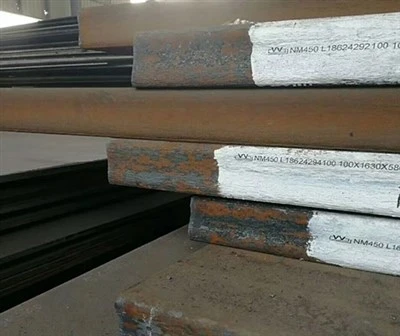
First, let’s start with the basics. S235JR is a general structural steel grade that’s been a staple in construction for decades. It’s part of the European EN 10025 standard, which covers hot-rolled steel products for general structural use. The “S” stands for structural, “235” refers to its minimum yield strength in megapascals (235 MPa), and “JR” means it has a room-temperature impact test requirement—so it’s tough enough for most indoor and outdoor projects where temperatures don’t drop too extreme.
EN Corten steel, on the other hand, isn’t just one grade—it’s the common name for atmospheric corrosion-resistant steel that meets European standards, specifically EN 10025-5. Corten is short for “Corrosion Resistance Tensile,” and it’s designed to form a stable, protective rust layer when exposed to the elements. This isn’t the flaky, red rust you see on old garden gates that falls off and stains everything. It’s a tight, brown patina that seals the steel underneath, so it doesn’t corrode further once that layer is set. I remember when I first started dealing with Corten, I thought it was just “rusty steel” too—until a client told me about a Corten wall he’d installed 15 years prior, and it looked almost exactly the same as the day it went up, just that deep, warm brown patina.
Let’s get into the key differences that actually matter for your project. First, corrosion resistance. This is the big one. S235JR is standard carbon steel—if you leave it outside without any protection, it will rust. Fast. You have to paint it, powder coat it, or galvanize it to keep it from deteriorating. We supply S235JR all the time for indoor steel frames, garage structures, and parts that will be coated, because it’s cheap and strong enough for those uses. But if you put unprotected S235JR outside in a wet climate like the UK, within a year you’ll have rust streaks running down it, pitting on the surface, and you’ll have to sand and repaint it every few years. It’s not a set-it-and-forget-it option for outdoor exposure.
EN Corten steel? It doesn’t need that initial coating. When it’s first installed, it will look bright orange or red, and it will rust a lot in the first 6 to 12 months. But once that patina forms, it stops corroding. I’ve seen Corten retaining walls that have been standing in a rainy Welsh field for 10 years, and they’re solid. No rust holes, no streaking. The patina is stable, so it doesn’t leach onto surrounding materials if you prep it right—wait, that’s another point: you do have to clean off the initial loose rust in the first six months if you’re installing it next to concrete or stone, because that loose rust can stain, but once the patina is set, you don’t have to worry about it. For projects where you want that natural, industrial look without regular maintenance, Corten is the way to go. S235JR can never give you that—even if you paint it, the paint will chip, and you’ll be back to dealing with rust.
Next, mechanical properties. Let’s talk about strength, because that’s critical for structural work. S235JR has a minimum yield strength of 235 MPa, as I mentioned earlier, and a tensile strength between 360 and 510 MPa. It’s ductile, easy to weld, cut, and bend—all the things you need for basic structural work. It’s great for when you need a reliable, affordable steel that’s easy to work with.
EN Corten steel, specifically the European grades like S355J2W or S355K2W (these are the common Corten grades under EN 10025-5), has a higher yield strength. Typically, around 355 MPa. Wait, that’s almost 50% stronger than S235JR. That’s a big difference. So if you’re building a heavy structure—like a large Corten sculpture, a deep retaining wall, or a bridge component—Corten is stronger than S235JR, even though it’s designed for outdoor use. It still welds just as easily as S235JR, by the way—we weld it all the time in our workshop, and you just have to use the right welding electrodes, same as you would for S235JR. The alloying elements (copper, chromium, nickel) that make Corten corrosion-resistant also give it that extra strength. I’ve had clients who tried to use S235JR for a large outdoor beam, and it kept bending because the strength wasn’t enough. Switching to Corten fixed that.
Cost is another big one, and it’s where a lot of people get caught off guard. S235JR is cheaper than Corten steel, no question about it. Because it’s a more common grade, produced in massive volumes, it’s easy and affordable to source. But when you add in the cost of protection—paint, regular maintenance, repainting every 5 to 10 years over the life of your project—that adds up fast. For example, a 10-meter retaining wall made of S235JR would cost less upfront, but over 20 years, you might spend another 20-30% of the initial cost on paint and upkeep. Corten has a higher upfront cost—usually 20-40% more than S235JR—but over time, it’s almost maintenance-free. The patina does all the work. I always tell clients to calculate the long-term cost, not just the initial price. If it’s a small, temporary project where you’re going to take the steel down in a few years, S235JR might make sense. If it’s a permanent structure that’s going to be in the elements for decades, Corten is a better investment.
Appearance is huge too, and that’s why so many architects love Corten. S235JR, if you don’t coat it, looks like raw steel—silver grey, until it starts rusting, and then it’s that flaky red mess. You can paint it any color, but that’s a man-made look. Corten’s patina is natural, it ages beautifully, deepening to a rich brown, almost black in some areas, depending on the weather. It complements modern, industrial, rustic, and even minimalist designs. I worked on a café project a few years ago where the owner wanted a Corten facade, and the patina over time looked way better than any painted steel he could have chosen. We also did a Corten planter for a London apartment, and when the patina set, it didn’t clash with the building’s concrete and glass. S235JR can’t give you that organic, evolving look. It’s static unless you change the paint.
Wait, but there are some cases where S235JR is still the right choice. If your project is indoor—steel studs, floor joists, beams in a warehouse, support for a roof that’s under cover—S235JR is perfect. It’s affordable, easy to work with, and you can coat it if you want, but you don’t have to worry about atmospheric corrosion inside. Also, if you’re on a very tight budget for a temporary structure—like a event stage that will be taken down after a few months—S235JR is more than enough. You might even be able to reuse it, whereas Corten is designed for permanent use.
Another thing to note: standards. S235JR is standardized under EN 10025-2, which is for non-alloy structural steels. EN Corten steel is under EN 10025-5, which is specifically for weather-resistant structural steels. That means there’s a third-party standard that ensures the steel meets the required corrosion resistance and strength, so you know you’re getting the real thing. A lot of cheaper “rusted steel” sold online isn’t actually EN Corten—it’s just S235JR that’s been artificially rusted, and that doesn’t have the same stable patina. It will keep rusting, stain everything, and not have the same strength. As an EN Corten supplier, I always tell clients to check for the EN 10025-5 certification, because that’s the only way to get the real Corten.
I’ve made mistakes with this early on in my career. About 12 years ago, a client asked for steel for an outdoor garden arch. I recommended S235JR because it was cheaper, and he painted it. A year later, the paint was peeling, and the arch had rust spots. He had to replace it, and I lost a repeat order. That’s when I realized that matching the steel to the project’s conditions is more important than saving a few pounds upfront. Now, I walk every client through the conditions: where is it going? Is it exposed to rain, salt air (if it’s near the coast), extreme temperatures? What’s the design goal—do they want a low-maintenance structure, or are they okay with upkeep?
Coastal projects are a great example. Salt air accelerates corrosion. S235JR will rust much faster near the sea, even if you paint it. Corten, however, has a higher resistance to atmospheric corrosion, including salt. I have a Corten fence installation in Brighton that’s been up for 8 years, right by the seafront, and it’s still solid, no streaking, no pitting. S235JR would have needed a full repaint every two years there, and even then, it would have rusted through.
Welding and fabrication is another point. Both S235JR and EN Corten are weldable, but Corten does need a bit more care, especially if you’re welding outdoors in cold or wet conditions. The alloying elements in Corten can make it more prone to cracking if you don’t use the right electrodes and preheat it properly. But if you’re an experienced fabricator, that’s not a big deal. We have a team of welders who work with Corten every day, and as long as they follow the standard procedures, it’s just as easy as working with S235JR.
Let’s summarize this to make it clear. S235JR is a general-purpose, affordable structural steel, great for indoor projects, temporary outdoor structures, and coated applications where you need basic strength. It requires regular maintenance to prevent rust. EN Corten steel is a weather-resistant, higher-strength steel designed for permanent outdoor use, with a stable patina that eliminates long-term maintenance. It has a higher upfront cost, but saves money over time, and offers a unique, natural aged appearance.
Now, I should add that there are different grades within both families. For example, S235JR is the basic grade, but there’s also S235J0 and S235J2 for lower temperatures. Corten has S355J2W, which is the most common, for general outdoor use, and S355K2W for colder climates, since it has better impact resistance in low temperatures. But for most projects, S235JR and basic Corten are the two grades you’ll be comparing.
I get asked all the time: “Can I use Corten instead of S235JR?” The answer is usually yes, if your project is permanent and outdoor, and you can afford the upfront cost. But if you’re on a tight budget, indoor, or temporary, S235JR is the better choice. It’s not that one is “better” than the other—they’re just for different jobs. As a supplier, my job isn’t to push Corten every time. It’s to tell you what will work best for your project, based on your needs, budget, and long-term goals.
Last month, we had a client who was building an outdoor kitchen. He initially wanted S235JR for the frame, because it was cheaper. But when we talked, he mentioned he didn’t want to paint it, and he wanted it to look good for 20 years. We recommended Corten, and he went with it. Now, he’s sending us photos of the patina forming, and he’s already gotten compliments from neighbors. That’s the kind of win I love—helping a client make the right choice, not just sell them the most expensive product.
If you’re planning a project, whether it’s a retaining wall, sculpture, fence, facade, or any other outdoor structure, and you’re trying to decide between S235JR and EN Corten steel, don’t guess. Reach out, tell me about your project, where it’s going, what you need it for, and I’ll help you figure out which one is right for you. As someone who’s been in this business for years, I’d rather you get the steel that works for your project than make a mistake that costs you more later.
ASTM/ASME HSLA Steel Plate References:
- EN 10025-2:2004, Hot rolled products of structural steels – Part 2: Technical delivery conditions for non-alloy structural steels
- EN 10025-5:2019, Hot rolled products of structural steels – Part 5: Technical delivery conditions for weather resistant steels
- Corrosion of Weathering Steels, NACE International, 2018
- Structural Steel Design, McCormac, J.C., 7th Edition, 2020
Gnee Steel (Tianjin) Co., Ltd.
As one of the most professional en corten steel manufacturers and suppliers in China, we also support customized service with low price. We warmly welcome you to buy high quality en corten steel in stock here from our factory. If you have any enquiry about free sample, please feel free to email us.
Address: No.4-1114, Beichen Building, Beicang Town, Beichen District, Tianjin, China
E-mail: alloy@gneesteelgroup.com
WebSite: https://www.chinavesselplates.com/
