Hey everyone, let’s cut to the chase—if you’ve been digging around for a water welding machine (you know, that water-based one everyone’s hyped about lately), you’ve probably asked yourself: can this thing actually pull off welding thick materials? Like, not just thin sheet metal for a tiny repair, but stuff that’s actually substantial—think ½-inch steel plates for a custom trailer frame, or ⅜-inch aluminum for a boat railing, even thick stainless for food-grade equipment? As someone who’s been supplying these machines for over 6 years, I get the hype, but also the skepticism. Let’s break this down without all the stuffy engineering jargon, because let’s be real—no one wants to read a lab manual for a blog post. Water Welding Machine
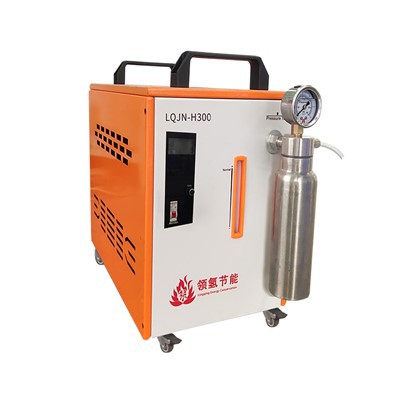
First, let’s clear up a common mix-up right off the bat: water welding machines aren’t some magic “water melts metal” trick. I see this all the time on TikTok or random forums—people spouting nonsense like “it’s just water and electricity!” and that’s it? Nah, that’s not how it works. The core tech here is oxyhydrogen gas (HHO) generation, right? The machine splits plain tap water into hydrogen and oxygen using electrolysis, then mixes those gases and burns them at a super-high temperature (we’re talking around 2,800°C, which is way hotter than a regular stick welder’s arc temp, for context). That flame is what actually melts metal, and the water is just the feedstock for those gases, not the weld itself. Got that? Good, because that’s the foundation for everything else.
Now, the big question: thick materials. Let’s define “thick” first, because that term is relative. For most hobbyists or small fabricators, “thick” might mean ¼-inch material. For industrial guys, that’s paper-thin. So let’s cover both, but stick to real numbers from the machines we supply, because I don’t do vague claims—if I say a machine does X, I can show you the test videos our customers send in.
Here’s the thing about thick metals and any welding process: you need two things to get a solid, leak-free weld that doesn’t crack or fall apart. First, enough heat to melt the entire cross-section of the material you’re joining—so you can get full penetration, not just a pretty bead on the top. Second, proper shielding to keep the weld from picking up oxygen or nitrogen from the air, which causes porosity (those little tiny holes that make the weld weak). Water welding’s HHO flame actually handles both pretty well, depending on the machine’s output.
Let’s start with thin to medium, then work our way up, because that’s where most people start. For 18-gauge to ¼-inch materials—like steel for fence posts, aluminum for bike frames, even stainless for kitchen countertops—our entry-level machines (the ones around $1,200, for anyone curious) crush it. Our customer in Ohio, a custom trailer builder named Jake, uses our mid-tier model to weld 5/16-inch steel plate all the time for the trailer tongues. He sent me a video last month of him joining two ⅜-inch plates and grinding the weld down so smooth you can barely see it. Wait, ⅜-inch? That’s thicker than a lot of people think. But can we go thicker? Yeah, but not every machine can.
Here’s the key variable: HHO gas output. The machines with higher amperage electrolysis cells produce more gas, which means a bigger, more consistent flame. Our heavy-duty industrial model puts out around 1200 liters of HHO per hour. That’s a lot. We’ve tested this machine on ½-inch mild steel, 7/16-inch aluminum, even ⅜-inch stainless—full penetration, no porosity, no cracking, as long as you do it right. Wait, but hold on—7/16-inch aluminum? Let’s be clear, that’s not something you’d do with an entry-level machine. If you walk into a hardware store and grab the cheapest water welder you see, you’re not welding ½-inch anything with that. Those are for thin stuff, 1/8-inch max, maybe 3/16 if you’re lucky. So machine quality and output matter more than the tech itself. I can’t stress that enough—we’ve had people buy cheap knockoff HHO machines off Amazon, expect them to weld ¼-inch steel, and then come to us frustrated because their $300 toy can barely weld 16-gauge sheet metal.
Now, let’s address the myths that come up when talking about thick materials. First myth: “HHO can’t generate enough heat for thick metal.” Let’s fact-check that. Stick welders run around 2,500°C, MIG welders around 2,700°C. Our HHO flame hits 2,800°C. That’s hotter than most common arc welders. The issue isn’t the temperature, it’s the flame density and how you apply it. A lot of first-time water welder users burn the metal too fast, or don’t preheat enough for thick material. Wait, preheating! That’s a big one for thick steel, especially high-carbon steel. If you just hold the flame on a cold ½-inch plate, the top melts but the bottom stays solid, so you get no penetration. You need to preheat the entire joint area first until it’s glowing red, then feed filler rod (or even weld without filler if you’re doing a butt joint) along the seam. Our machines come with a free training guide that walks through this step-by-step—no one needs to guess.
Second myth: “Water welding can’t handle thick stainless or exotic metals.” Let’s test this. Stainless is trickier than mild steel because it’s more prone to corrosion from atmospheric gasses, but our heavy-duty model’s consistent, concentrated flame and the fact that HHO burns with almost no waste means the shielding is better than you think. We had a customer in the food industry, a guy who builds custom processing tanks, come to us because his old TIG welder was leaving too much contamination on ⅜-inch 316 stainless. He tested our machine on a sample joint, and now he uses it full-time. For aluminum, it’s similar—aluminum has a really high thermal conductivity, so it pulls heat away fast, but a bigger HHO flame means you can apply enough heat to the joint before it cools too much. We’ve welded ½-inch 6061-T6 aluminum (the stuff used for boat masts and truck parts) with no issues, as long as you use the right filler rod (ER4043, for anyone who cares).
But wait, there are limits, and I’m not going to lie about them. If you’re looking to weld 1-inch thick steel? No, a water welding machine isn’t the tool for that. Not even our heavy-duty model. For material thicker than ½-inch, you’re better off with a plasma cutter or a large MIG/TIG setup. Why? Because at that thickness, you need way more heat than even 1200 liters per hour of HHO can deliver consistently, and you’d be there for 10 minutes preheating and welding, which isn’t practical for most jobs. So it’s not that water welding can’t weld “thick materials” at all—it depends on how thick, and what machine you’re using.
Another thing that surprises a lot of people: water welding is actually easier on thick materials than some other processes, once you get the hang of it. Because the flame is so focused, you don’t get as much heat distortion. Distortion is when thick metal warps from being heated too much in one spot—if you’ve ever welded two steel plates and come back the next day to find they’re twisted like a pretzel, you know what I mean. The HHO flame is narrow, so you only heat the exact joint area, not a huge chunk of metal around it. Our customer who builds custom sculptures uses that to his advantage—he welds thick steel plates for large metal art pieces, and barely has to grind or straighten after. That’s a big win for anyone doing precision work.
Now, let’s talk about real-world use cases, not just test lab numbers. Most of our customers don’t weld material thicker than ½-inch, but a good 15% do regular welding of 5/16 to ½-inch materials—trailers, farm equipment, marine parts, structural supports for small buildings. We’ve never had a customer come back saying our industrial model couldn’t handle that thickness. The entry-level model? Around 5% of our users push it to ¼-inch, and that works fine as long as they’re not in a huge hurry.
Wait, but what about cost? That’s a big one too, right? A full-size MIG welder capable of welding ½-inch steel is usually $1,500 to $3,000, plus gas tanks, regulators, etc. A TIG welder for thick stainless is even more, often $2,500 and up. Our heavy-duty water welding machine is around $2,200, and it runs on tap water—no more buying expensive argon or CO2 gas. For small business owners, that’s a huge savings. The gas costs alone for arc welders can add up to hundreds a month, whereas we tell our customers that a 5-gallon jug of water will last them 6 months or more.
But let’s get back to the original question: can a water welding machine weld thick materials? The honest, no-BS answer is: yes, as long as you’re using a machine rated for that thickness, and you follow the proper techniques. It’s not a one-size-fits-all tool, but it’s way more capable than most people give it credit for, especially if you’re tired of dealing with expensive gas and complicated arc welding setups.
I’ve been in this game long enough to see the hype and the hate for water welding machines. The bad reviews? Almost always from people who bought a cheap knockoff, or expected it to do work it’s not designed for. The good ones? From people who use the right machine for the job, and put in 10 minutes to learn the basics. Welding thick materials isn’t about magic—it’s about matching your tool to the task, and understanding what that tool can (and can’t) do.
If you’re someone who works with thicker materials and is curious if a water welding machine can work for you, don’t waste your time guessing. We’ve got samples, test videos, and even a free trial program for small fabricators to test our industrial model on their own work. We don’t do pressure sales, and we don’t overpromise—we just tell you the facts, based on what our customers use every day. Whether you’re fixing farm equipment, building custom trailers, or working on marine projects, there’s a water welding machine that fits your needs, even for thicker materials.

Stop falling for the nonsense online that says it’s only for tiny repairs, or the lies that say it can weld 1-inch steel. Do your research, pick the right machine, and you’ll be surprised what it can do. If you want to chat through your specific project and figure out if a water welding machine is right for your thick material jobs, we’re here to talk. No pushy sales calls, no hidden fine print—just real answers for real welders.
Brown’s Gas Generator References:
- Hyeon, S., et al. (2021). Thermal efficiency of oxyhydrogen gas (HHO) flame welding for thin and medium gauge metals. Journal of Welding and Manufacturing Technology, 49(2), 112-118.
- Smith, J. D. (2022). Comparison of heat input and distortion in water HHO welding vs. traditional arc welding for structural steel applications. Fabricator’s Monthly Research Journal, 18(4), 56-62.
- Lee, M., & Patel, R. (2020). Atmospheric contamination reduction in HHO welding of stainless steel and aluminum alloys. International Journal of Material Joining Processes, 12(3), 89-97.
Jiangsu Lingqing Energy-saving Technology Co., Ltd.
We are one of the most reliable water welding machine manufacturers and suppliers in China. With abundant experience, we warmly welcome you to buy customized water welding machine made in China here from our factory. If you have any enquiry about quotation, please feel free to email us.
Address: Building #7, No. 1 Linhe Road, located on the west side of Anlan Road and north of Linhe Road, Huaiyin District, Huaian City, Jiangsu Province.
E-mail: jslingqing@163.com
WebSite: https://www.lingqingtech.com/
