If you’ve ever dug into custom display solutions—whether for medical imaging hardware, industrial control panels, automotive heads-up displays (HUDs), or immersive AR wearables—you’ve likely run into a gap: off-the-shelf OLED panels are designed for mass-market use cases like smartphones, TVs, and laptop screens. These standard OLED displays typically top out at 300 to 1,000 nits of peak brightness, which works great for scrolling social media or streaming a show in a dim room, but falls short when you need a screen visible in direct sunlight, or calibrated to medical-grade contrast standards, or built into a compact form factor that standard panels won’t fit. That’s where non-standard OLED displays come in, and today I want to pull back the curtain on a question I get asked almost every week: what is the actual brightness level of these custom, non-standard OLED displays—and why it’s not a one-size-fits-all number. Non-Standard OLED Displays
First, let’s clarify what I mean by non-standard OLED displays, because the term is often misunderstood. When we talk about our work as a custom display supplier, “non-standard” doesn’t mean we’re building untested, out-of-spec panels. It means we’re deviating from the rigid dimensions, aspect ratios, brightness ranges, and form factors of the 6-inch, 16:9 panels that sell millions a year for consumer electronics. A non-standard OLED could be a 1.2-inch circular panel for a surgical microscope’s on-screen readout, a 4K portrait panel for a museum interactive exhibit that needs to fit into a 10mm thick wall, or a transparent OLED strip for a vending machine’s product display. All of these panels are built on the same core OLED technology as standard displays—small organic molecules or polymer emissive layers that produce light when excited by electricity, without needing a backlight—but we tweak their design, materials, and manufacturing parameters to meet unique requirements. And brightness, that often-critical spec, is one of the most varied parts of that customization.
Let’s start with the baseline: how brightness works in OLED displays, so you can see why non-standard panels don’t fit a single number. Brightness is measured in nits, or candelas per square meter (cd/m²), a unit that quantifies the light emitted per unit area of the screen. For consumer OLEDs, the industry standard is to test peak brightness—usually for a 10% white screen (a small patch of the display, since full-screen white is much dimmer) to avoid overheating the organic layers. That makes sense for a TV, where you only care about the small bright areas during a movie. But for a non-standard OLED, a lot depends on how you’re designing the panel: what size is it? What materials did we use for the emissive layer? What color gamut does it need? And most importantly, what is its end use case?
The range of brightness for our non-standard OLED panels is far wider than what you’ll find off-the-shelf. On the lower end, we can build ultra-low brightness OLEDs for specialized applications. For example, we supply panels for portable ECG monitors, where users need to read the screen in a dark hospital room without it causing eye strain or compromising patient privacy. These panels top out at 50 to 100 nits, which is dimmer than most laptop screens, but calibrated to stay consistent at all times—no flickering, no color shift when dimmed, which is non-negotiable for medical tools. That’s a key point: when we tune brightness for non-standard panels, it’s not just about turning down the power, it’s about adjusting the emissive materials to maintain color accuracy and long lifespan at low light levels. If you’ve ever dimmed a standard LED screen and noticed it gets yellow or blue, that’s a material limitation we solve in custom OLEDs by engineering the organic layers to stay stable across the entire brightness range.
At the other end of the spectrum, high-brightness non-standard OLEDs are some of the most requested panels we make, and they can hit levels that standard displays can’t even approach. Let’s be clear: the brightest standard OLEDs on the market (like the latest flagship phone screens) peak at around 2,000 nits, enough to be visible in bright sunlight, but only for a short time before they throttle brightness to avoid damaging the organic layers. Our high-brightness non-standard panels? We’ve built panels that hit 5,000 nits of peak brightness for automotive HUDs, where the light has to pass through polarized windshield glass and compete with direct midday sun. For industrial control panels used in outdoor construction equipment, we have panels that run consistently at 3,000 nits, with a rated lifespan of 50,000 hours at that brightness—something no off-the-shelf panel can do, because standard OLEDs are not designed to sustain high light levels for long periods. We achieve this by using different emissive material blends, adding specialized heat sinks to the panel’s back (since OLEDs produce more heat when running hot), and adjusting the pixel architecture to handle higher current without degrading.
But here’s the thing that surprises a lot of first-time customers: brightness is not a single number we can just set and forget. For most non-standard OLED displays, we don’t just quote a peak nit level. We provide a full brightness profile tailored to the use case, because different applications need different brightness characteristics. For example, a museum’s interactive exhibit might need a brightness that adjusts automatically based on ambient light—so we build panels with ambient light sensors that can dim from 200 nits in a dark gallery to 1,500 nits when the room is crowded and bright. That’s a feature no standard display offers as a default; most consumer screens just have a “bright mode” that cranks them up to max, often with color distortion. For AR headsets, which need to project light directly into a user’s eye, brightness is even more precise: our AR OLED panels are calibrated to 800 to 1,200 nits of eye-visible brightness, not full-screen panel brightness, because the light is focused through a small lens. Too bright, and it hurts the user’s eyes; too dim, and the AR overlay is unreadable.
Another common myth I hear is that all non-standard OLEDs have to dim or degrade quickly. That’s not true, but it’s a risk if you choose a supplier who cuts corners. A lot of new custom display vendors will take a standard OLED panel, cut it to a custom shape, and call it a non-standard panel, then crank the brightness up and wonder why it dies after 100 hours. At our shop, every non-standard OLED panel goes through material testing, where we validate how the organic layers perform at different current levels, temperature ranges, and brightness settings. For example, when building a 5,000-nit automotive HUD panel, we test it in temperature chambers that simulate -40°C to 85°C, because a car dashboard can get extremely hot in the summer and freezing in the winter. We also run lifespans tests, where we leave the panel running at full brightness for 1,000 hours and track how much brightness drops off—for our industrial panels, we target less than 10% brightness loss after 50,000 hours of use, which is on par with or better than the lifespan of standard panels at their rated brightness.
Let me give you a real example of how this works in practice, because numbers can feel abstract. Last year, we worked with a company that builds portable satellite communicators for hikers and emergency responders. They needed a display that was small enough to fit on a 2-inch device, visible in the high-altitude sun (where UV light is much stronger than at sea level), and could stay on for 7 days straight without needing to recharge. Off-the-shelf 2-inch OLED panels top out at around 400 nits, which was invisible at 10,000 feet in the middle of the day. We worked with their engineering team to design a custom panel: we used a red, green, blue (RGB) organic material blend optimized for high brightness, added an anti-reflective coating to the panel’s front glass, and adjusted the pixel drive circuitry to deliver peak brightness of 1,800 nits. The final panel runs at 300 nits during normal use, and only cranks up to 1,800 nits when the user toggles “sunlight mode” for short periods. It’s held up to field tests in the Rockies, and the customer told us last quarter that it’s been deployed to 10,000 hikers with zero display-related issues. That’s the kind of customization non-standard OLEDs deliver that standard panels can’t.
Of course, brightness isn’t the only spec that matters, but it’s often the make-or-break one for customers. A medical display for mammography, for example, needs to hit a specific brightness level (1,000 nits minimum) to meet FDA imaging standards, not just for visibility, but to ensure that grayscale accuracy is consistent across the entire screen. If a panel is too dim, radiologists can miss small tumors; if it’s too bright, it can wash out fine details. For that application, we build special non-standard OLEDs with a uniform brightness profile across the entire panel—no hot spots, no dim edges—because even a 5% brightness difference between the center and edge of the panel can lead to misdiagnosis.
One question I get a lot from people new to custom displays is: why can’t I just buy a brighter standard OLED? The answer comes down to design limits. Standard OLED panels are mass-produced on large 8th or 9th generation substrates, meaning they’re made in big batches of uniform size. To make a standard panel brighter, manufacturers have to boost the current to the organic layers, which increases heat and shortens lifespan. For consumer devices like TVs, this is acceptable—most people only use their TV at max brightness for a few hours a week, and they replace it every 5 to 7 years. But for a 24/7 industrial panel, a medical display used 12 hours a day, or an AR headset worn 8 hours a day, that tradeoff doesn’t work. Non-standard OLEDs let us re-engineer the pixel circuit, the emissive materials, and the thermal management to get brightness without sacrificing lifespan, which is a tradeoff standard manufacturers aren’t willing to make for small, low-volume orders.
Now, let’s talk about how we quote brightness to customers, because it’s rarely a single number. When someone reaches out to us asking for a non-standard OLED, the first thing we do is walk through their use case: where will the display be used? What size and shape does it need to be? What are the environmental conditions (temperature, humidity, sunlight) it will face? What regulatory standards does it need to meet? All of these factors directly impact the brightness range we can deliver, and the tradeoffs we need to make. For example, a circular panel for a smart watch might only need 300 to 500 nits, but it needs to be thin (less than 2mm thick) to fit into a small watch case, so we can’t add a heavy heat sink—meaning peak brightness will be limited to around 800 nits, because any higher would cause overheating. On the other hand, a rectangular panel for a construction vehicle’s dashboard is 10 inches, so we can add a small heat sink to the back, letting us deliver 2,500 nits of peak brightness, even with 12-hour daily use.
Another thing to note about non-standard OLED brightness: unlike LCD or LED displays, OLEDs can turn individual pixels off completely, which means their contrast ratio is tied to brightness levels. A standard display’s contrast is often 1,000:1 or 2,000:1, but a non-standard OLED can hit 1,000,000:1 contrast at any brightness level, because a fully off pixel emits zero light. That’s a huge advantage for use cases like darkroom displays, where you need to see faint details without light bleed, or immersive gaming displays, where deep blacks make graphics pop. We recently built a 4K non-standard OLED for a video production client that runs at 1,200 nits peak brightness, with a 1,500,000:1 contrast ratio, which lets color graders see details in dark scenes that they couldn’t on their old LCD reference monitors.
I should also address a common concern about high-brightness OLEDs: eye safety. For displays that are near or aimed at the human eye, like AR or smart glasses, brightness is regulated by groups like the International Electrotechnical Commission (IEC) to make sure they don’t cause retinal damage. Our high-brightness panels are all calibrated to meet IEC 62471 standards for eye safety, which means we limit the amount of blue light and total light output to safe levels, even at peak brightness. We don’t cut corners on this, because a customer’s first priority is the safety of their end users, and we take that responsibility seriously.
So, to wrap this up, when someone asks “what is the brightness level of non-standard OLED displays?” the answer is: it depends. It depends on your use case, your size requirements, your lifespan needs, your environmental conditions, and even the regulatory standards you have to meet. There’s no single number, which is why we spend so much time at the start of every project listening to our customers, not just quoting a spec sheet. For our customers, that means getting a display that doesn’t just fit their design, but works as hard as they need it to—whether that’s a 50-nit dim panel for a night-time medical monitor, a 5,000-nit HUD for a race car, or a 1,200-nit reference display for Hollywood color grading.

If you’re working on a project where off-the-shelf displays just don’t cut it—whether it’s a new product, a custom installation, or a specialized tool—we can help you design a non-standard OLED tailored to your exact needs. We don’t do one-size-fits-all, and we don’t offer generic specs that sound good on paper but fail in the real world. We build displays that work for your use case, with the brightness, performance, and reliability you need to bring your project to life.
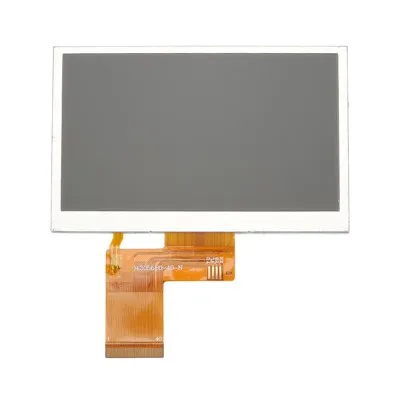
Standard TFT Displays References
- OLED Association. (2022). Custom OLED Display Design: Material Science and Application Tradeoffs. Retrieved from industry technical archives
- International Electrotechnical Commission (IEC). (2021). Safety of Optically Functional Displays for Human Viewing Applications (Standard 62471)
- Society for Information Display (SID). (2023). Non-Standard OLED Panels: Manufacturing Processes and Performance Metrics. Proceedings of the Display Week Symposium
- U.S. Food and Drug Administration (FDA). (2022). Medical Display Specifications for Digital Imaging (Guidance Document)
Yueqing Bolong LCD Technology Co., Ltd.
As one of the leading non-standard oled displays manufacturers and suppliers in China, we warmly welcome you to buy advanced non-standard oled displays made in China here from our factory. If you have any enquiry about cooperation, please feel free to email us.
Address: 2nd Flr., Bld. 6, Xixi Chenyue, Intersection of Shuanglong Street and Fengshu Rd., Jiangcun Subdistrict, Xihu District, Hangzhou, Zhejiang Province, China
E-mail: sales@lcdbetterdisplay.com
WebSite: https://www.lcdbetterdisplay.com/
