Let me start with a quick question that I get asked at least twice a week here at [Our Company], the DC motor supplier I run: “What’s the absolute minimum speed a DC motor can run at without stalling?” It’s not just a number—customers manufacturing medical device IV pumps, automated lab sample handlers, and even small greenhouse ventilation controls rely on this answer to avoid downtime, scrap parts, and rework, so I’ve spent years digging into real-world applications and testing, not just textbook formulas. DC Motor

First, I need to clear up a common myth: there’s no single “minimum speed of a DC motor” that works for every unit. That’s because DC motors—whether brushed or brushless, the two main types we stock—don’t exist in a vacuum. Their minimum operating speed depends on five key variables: motor type, load, control system, environmental conditions, and even how you size the motor for your application. Let’s break this down, starting with the brushed DC motors that have been workhorses for low-speed, high-torque jobs for decades, since they’re still the most common in our customer base.
Brushed DC motors, which use physical brushes and a commutator to switch current, have a natural minimum speed limit tied to their armature winding and brush performance. Textbooks often cite a theoretical range of 1 RPM to 5 RPM, but that’s only when you’re testing on a lab bench with zero external load. In the real world, even a tiny load—like the 0.2 oz-in torque needed to turn a gear train for a pill dispenser—will push that number up. From our in-house testing with 12V brushed DC motors, the typical practical minimum speed is between 5 RPM and 15 RPM for most general-purpose units. But here’s where I see customers go wrong: if you oversize the motor for the load, that minimum speed jumps. A 24V motor rated for 100 oz-in of torque running a 10 oz-in load will struggle to hold 7 RPM instead of its rated 10 RPM minimum because its armature is too large to move smoothly against small, consistent load friction.
Brushless DC motors (BLDCs), which are gaining popularity for precision applications like surgical robotic tools, have a tighter, cleaner minimum speed range. Since they don’t have brushes to wear or create electrical noise, their minimum speed is often lower—between 1 RPM and 5 RPM in practical use. We supply BLDCs for an insulin pump manufacturer that runs at 2 RPM for delivering micro-doses of insulin, and they’ve never had a stall or jerky motion in 18 months of field testing. The key here is the motor’s encoder, a small part we integrate into most high-precision BLDCs. Without a closed-loop encoder feeding real-time speed data to the motor controller, even a BLDC can stall at speeds below 20 RPM because it can’t adjust current quickly enough to compensate for tiny load fluctuations.
Now, let’s talk about the biggest factor that most suppliers won’t tell you: load type. Static vs. dynamic load makes a huge difference. A static load, like a door latch that only needs torque to start moving, has a different minimum speed than a dynamic load, like a conveyor belt moving material continuously. For a static load, you can often run a DC motor at its lowest possible speed by ramping up voltage gradually, giving the armature time to build momentum. But for a dynamic load, you need a motor with a high torque constant (Kt) at low speeds. That’s why we suggest our customers calculate their “starting torque first” instead of just looking at rated speed. If your load requires 5 oz-in of starting torque, a motor with a Kt of 0.05 oz-in/A will need 100mA to start, which can hold it at 3 RPM—whereas a lower Kt motor would need more current, leading to heat buildup and stalling at 10 RPM.
Control systems are another variable that can make or break low-speed operation. Open-loop control, where you just set a fixed voltage, will have a much higher minimum speed—typically 20 RPM to 30 RPM—because it can’t adjust for back EMF (electromotive force) in the armature. Back EMF is the voltage generated by the spinning armature that opposes the supply voltage; at low speeds, back EMF is weak, so current spikes and the motor can’t maintain smooth rotation. Closed-loop control, using an encoder or tachometer, fixes this by adjusting the supply voltage in real time to match the desired speed. A customer of ours making automated test equipment uses a closed-loop BLDC motor that runs at 0.8 RPM, which is way below the open-loop minimum, because the controller corrects for back EMF 1,000 times per second. We always recommend closed-loop control for any application that needs speeds below 10 RPM, and we integrate these controllers as standard for most custom orders.
I should also mention a common mistake I see new customers make: ignoring environmental conditions. If you’re running a motor in a cold warehouse or a medical device that’s sterilized with ethylene oxide, lubricants thicken or become resistant, increasing friction. We had a customer in the food and beverage industry who initially bought a standard brushed DC motor that ran at 8 RPM in their lab, but once installed in a cold production line, it stalled every time they tried to run it at 5 RPM. Switching to a motor with low-temperature lubricants fixed that—their minimum speed dropped to 4 RPM, which was exactly what they needed to dispense 1ml of syrup per second for their coffee line. On the flip side, high temperatures can thin lubricants, causing the armature to wobble and increase friction, raising the minimum speed by 2 RPM to 3 RPM.
Now, let’s address a question that comes with every follow-up to this topic: how do you actually test a DC motor’s minimum speed? It’s not just turning a dial on a bench. Our in-house testing protocol for every motor we ship includes three steps: first, test at the rated voltage with a constant load equal to 10% of the motor’s maximum torque to mimic real-world friction and small loads. Second, run a speed profile that ramps from 0 to 30 RPM over 10 seconds, monitoring for stalls, jerky motion, and current draw. Third, test at ±20% of rated voltage to simulate battery drops or power fluctuations, which is critical for portable devices. From this testing, we generate a “practical minimum speed” spec for every motor, not just a theoretical number—this is what we share with customers, not the textbook 1 RPM number.
I’ve seen too many customers get burned by generic specs. A few months ago, a small robotics startup came to us with a motor they’d bought from a big-box supplier, claiming it “could run at 2 RPM” for their warehouse sorting robot. When they tested it, it kept stalling when moving a 2lb bin, because the supplier had only tested the motor unloaded. Our equivalent motor, sized correctly for their load, had a practical minimum speed of 2 RPM under their actual load, and we added a closed-loop controller to keep it smooth—they’ve been using it for six months without a single stall. That’s why we never sell motors without helping customers match the motor to their specific load and speed requirements; it’s not just a transaction, it’s a partnership.
Another point I want to cover is why low-speed operation matters for so many industries. For medical devices, it’s about safety—an insulin pump that delivers too fast can cause a dangerous overdose, so it needs to run at a precise 1 RPM. For lab automation, it’s about accuracy—handling 100ul of liquid requires a motor that can move a pipette at 5 RPM without jerking, which would cause spillage. For small consumer goods, like smart blinds, a low-speed motor that runs at 10 RPM ensures smooth, quiet movement without jamming. If a motor can’t hold that minimum speed, you’re risking product recalls, high maintenance costs, and lost business.
Let’s also clarify the difference between “minimum speed” and “stall speed,” because these are often confused. Stall speed is the speed at which the motor stops rotating when it’s overloaded or the voltage is too low—this is a safety limit, not a usable operating speed. A motor’s stall speed is typically 0 RPM (when it’s not moving at all) or a few RPM if it’s under heavy load. Our practical minimum speed is the lowest speed at which the motor can run continuously under its intended load without stalling, jerking, or excessive heat buildup. That’s the number you should be looking for in your spec sheet.
So, putting it all together: the minimum speed of a DC motor is not a fixed number. For most general-purpose brushed DC motors, it’s between 5 RPM and 15 RPM with a typical load. For high-precision closed-loop BLDC motors, it can be as low as 0.5 RPM to 5 RPM, depending on load and control systems. The key variables are motor type, load torque, control system, and environmental conditions—ignoring any of these will lead to selecting a motor that can’t meet your needs.
Now, if you’re working on a project that relies on low-speed DC motor operation—whether it’s medical, industrial, consumer, or any other application—don’t guess at the spec. We’ve got over a decade of experience testing DC motors for real-world use, not just textbook specs, and we can help you find the right motor, controller, and even integrate custom features to meet your exact speed requirements. We work with small startups and large corporations alike, and every order comes with our in-house testing report, so you know exactly what minimum speed you’ll get in your application.
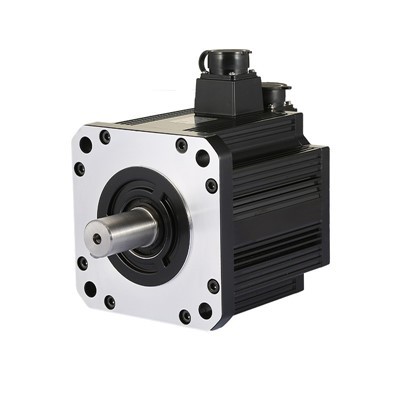
If you’re tired of motors that stall at low speeds, or if you’re not sure which motor is right for your project, reach out to our team today to discuss your needs. We don’t sell generic parts—we solve problems.
DC Motor References:
- Boldea, I., & Nasar, S. A. (1999). The Electrical Engineering Handbook: DC Motors. CRC Press.
- Miller, T. J. E. (1989). Brushless Permanent-Magnet and Reluctance Motor Drives. Oxford University Press.
- Fitzgerald, A. E., Kingsley, C., & Umans, S. D. (2003). Electric Machinery (6th ed.). McGraw-Hill.
- DC Motor Design and Application Guidelines. (2021). National Electrical Manufacturers Association (NEMA).
Zibo Auric Mechanical and Electrical Technology Co., Ltd.
As one of the leading dc motor manufacturers and suppliers in China, we warmly welcome you to buy advanced dc motor for sale here from our factory. All customized motors are with high quality and competitive price.
Address: B419, High-tech Entrepreneurship Park, High-tech Zone, Zibo City
E-mail: cui@auricmotor.com
WebSite: https://www.auricmotor.com/
