Hey there, if you’ve ever shopped for an engraving and milling machine, you’ve probably stumbled across two terms that make even seasoned hobbyists scratch their heads: open-loop and closed-loop control. I’ve spent 12+ years selling these machines, talking to carpenters, sign makers, aerospace prototypers, and even a few tiny-batch jewelry designers, and let me tell you—most people gloss over this part… only to regret it later when their machine messes up a $500 project (ask me how I know). Today, I’m breaking this down like I’m chatting over a coffee, no textbook jargon, just real-world stuff that matters for your shop. Engraving and Milling Machine

First, let’s keep this basic: every control system on these machines is basically the machine’s “brain” that tells the motors where to move. When you punch in “cut a 10mm circle here,” the system sends a signal to the motor, which spins or moves to hit that coordinate. The only difference? Whether the brain checks if it actually got there, or just assumes it did. That’s the whole open vs closed loop thing—no fancy stuff, I promise.
Let’s start with open-loop systems, since they’re the simpler, more budget-friendly option. For anyone new to this, open-loop is like texting your friend “I’m at the coffee shop now” and just assuming they got it. No receipt, no reply, no way to confirm. On engraving/milling machines, that works via stepper motors—steppers move in precise, fixed steps when you send them a signal. If you tell a stepper to turn 100 steps, it’ll do that… unless something stops it. What stops it? A heavy workpiece dragging, cutting resistance, a belt slipping, even a power dip that makes the motor skip a step. And here’s the kicker: the open-loop system has no clue this happened. It just keeps trucking along, thinking the motor’s exactly where it’s supposed to be.
I’ve seen this happen so many times. A guy I met at a woodworking show last year bought a cheap open-loop engraver for cutting custom guitar necks. He used it once, got one bad neck, shrugged it off, and used it again for a sign that had a $300 graphic. That second run, the stepper skipped 15 steps when it hit a knot in the walnut, and the final sign had a weird, lopsided “W” in his shop’s name. He called me upset, and I couldn’t blame him—open-loop’s not bad for certain jobs, but it’s blind.
What’s open-loop good for? Small, light projects where there’s zero resistance, and you’re not working with super precise dimensions. Think: engraving acrylic for keychains, cutting thin cardboard for prototype packaging, or small wooden signs that don’t need to be perfect within a fraction of a millimeter. Most entry-level desktop engravers (the ones under $1,500) run open-loop, and that’s totally fine if that’s all you need. It’s cheaper, easier to maintain, and doesn’t overcomplicate stuff for basic tasks. Just don’t try to mill a titanium prototype or a custom metal gear with it—you’ll be wasting time and material.
Now closed-loop systems, which are the ones I push for folks doing more serious work. Closed-loop is like texting your friend, getting a “seen” and a “your order’s ready” back, so you know for sure they got the message. On engraving/milling machines, these use servo motors instead of steppers, plus a feedback sensor (usually an encoder) on the motor shaft. That sensor is checking, like, a thousand times per second if the motor is actually where the system told it to be. If it skips a step, drags, or slips, the system sends an immediate correction signal to the motor to fix it right away. No mistakes, no wasted material, just precision.
Let’s circle back to that guitar neck guy I mentioned earlier. If he’d had a closed-loop machine, when the stepper (well, servo) tried to cut through that walnut knot and started to skip, the encoder would’ve flagged it, the motor would’ve adjusted instantly, and his neck would’ve been perfect. That’s the magic of closed-loop. It’s not just about not messing up mid-job, either. It’s about holding consistent accuracy over long runs. If you’re doing a batch of 50 custom metal nameplates for a construction company, every single one has to be identical to within 0.1mm—closed-loop is non-negotiable for that.
Closed-loop isn’t just for big industrial shops, either. I’ve had jewelry makers with small home workshops upgrade to closed-loop and go from “messy one-off pieces” to selling full custom engagement rings to local jewelers. The precision lets them engrave tiny details (like a client’s initials inside a band) that would turn out blurry or off on an open-loop machine. Even some smaller sign shops that do high-end commercial signs (think: big storefront logos with sharp, crisp lines) swear by closed-loop, because clients won’t pay top dollar for a logo that’s slightly lopsided.
But let’s be real—closed-loop isn’t perfect, and it’s not for everyone. The biggest downside is cost. A closed-loop engraving/milling machine can be 2-3 times more expensive than a comparable open-loop model, right off the bat. They also have more moving parts (the encoder, the servo motors, extra electronics) so they’re a tiny bit more to maintain. If you’re only doing occasional small projects, that extra cost is just throwing money away. I always tell customers: if your total project value is usually under $500 and you don’t need hyper-precise parts, open-loop works. If you’re regularly doing projects worth $1k+, or need parts that fit together (like gears, or custom machine parts), go closed-loop.
Wait, let’s clear up a common misconception I hear all the time: “Open-loop is worse, closed-loop is always better.” No way. I’ve sold open-loop machines to a guy who only engraves pet tags, and he’s been using the same one for 4 years with zero issues. Why? His job is simple, no resistance, no tight tolerances, and he doesn’t need to cut anything super hard. For him, the cheaper price and lower maintenance are way more important than that extra precision. Conversely, I’ve had a customer buy an open-loop machine because he thought it was “overkill” for his small sign business, and 6 months later he was back begging to upgrade because he lost a $1,200 contract when 10 of his 20 nameplates were off.
Another big difference is performance under load. Let’s say you’re milling a thick aluminum block—heavy, lots of cutting resistance. An open-loop stepper motor might struggle to push through the metal, skip steps, and ruin the part. A closed-loop servo motor has way more torque, and the encoder makes sure it keeps moving exactly where it’s supposed to, even under heavy load. That’s why closed-loop is the go-to for machining harder materials like metal, titanium, or thick hardwood, while open-loop is fine for soft materials like acrylic, thin wood, or foam.
I also want to talk about ease of use, because that’s a big one for new users. Open-loop machines are simpler to set up and troubleshoot. If a problem pops up, 9 times out of 10 it’s easy to fix—maybe a loose belt, or a stepper that’s not receiving power. Closed-loop machines have more features, so there’s slightly more to learn, but for most users, the built-in error correction means they’ll have fewer big headaches down the line. No more staring at a half-cut part wondering where it went wrong—closed-loop catches issues before they become disasters.
Let’s wrap this up with a quick, real-world comparison I like to tell customers: Think of open-loop as a bike with no speedometer. You pedal as hard as you think you should, but you don’t know if you’re going 10mph or 20mph, so you might miss your turn or end up on a different street. Closed-loop is a bike with a GPS that tells you exactly how fast you’re going, where you are, and adjusts if you veer off course. Both get you from point A to point B, but one is way more reliable if you’re going somewhere specific, and it doesn’t waste time if you need to be precise.
At the end of the day, the choice between open-loop and closed-loop comes down to what you actually use the machine for. There’s no “better” system—only the right one for your shop. If you’re still not sure, that’s totally normal! I’ve spent years walking customers through this, not pushing the most expensive model, just what fits their needs.
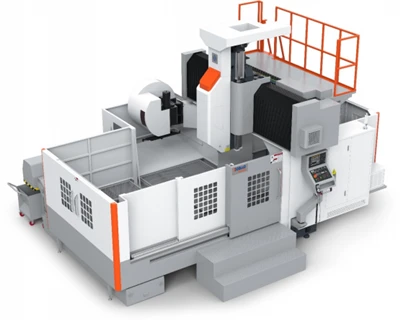
If you’re in the market for an engraving and milling machine—whether it’s your first or you’re upgrading your current setup—reach out to chat. I can walk you through the options, break down costs, and even help you figure out which system makes sense for the projects you do most. No sales pitch, just real advice from someone who’s been in this game long enough to know what works.
Gantry Machining Center References:
- Groover, M. P. (2019). Automation, Production Systems, and Computer-Integrated Manufacturing (5th ed.). Pearson.
- Bolton, W. (2020). Mechatronics: Principles and Applications (5th ed.). Newnes.
- American Society of Mechanical Engineers. (2021). Control Systems for Manufacturing Machinery: Standard Terminology and Performance Guidelines. ASME International.
Taizhou Qiyang Trading Co., Ltd.
As one of the most professional engraving and milling machine manufacturers and suppliers in China, we’re featured by quality products and good price. Please rest assured to buy bulk engraving and milling machine for sale here and get quotation from our factory. Customized orders are welcome.
Address: Zhenhai Village, Binhai Town, Wenling City, Taizhou City, Zhejiang Province
E-mail: qycncmachine@outlook.com
WebSite: https://www.qycncmachine.com/
