If you’ve ever walked into a auto parts store or browsed online for brake components, you’ve probably seen the term “OE brake rotors” pop up again and again. As someone who’s spent the last 12 years as a supplier specializing in OE-grade brake rotors, I’ve fielded this question hundreds of times: Do OE brake rotors fit both front and rear axles equally? It sounds like a simple yes-or-no question at first, but the answer is layered with engineering decisions, vehicle design priorities, and even small details that most casual drivers (and some replacement part shoppers) don’t stop to consider. Today, I want to break down the science behind why OE rotors aren’t interchangeable between front and rear axles, when they might seem like they are, and what that means if you’re a fleet manager, a mechanic, or a vehicle owner looking for reliable parts. OE Brake Rotors
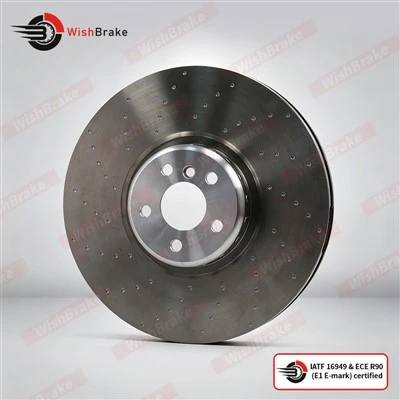
First, let’s start with a quick refresher on OE brake rotors, because that’s the foundation of the conversation. OE stands for Original Equipment, meaning these are the exact rotors your car, truck, or van rolled off the assembly line with. They’re not generic aftermarket parts made to fit a range of vehicles; they’re engineered specifically to match the weight, brake system, and performance needs of that exact model. Unlike some aftermarket rotors that cut corners on material or design to hit a low price point, OE rotors are made from certified cast iron (in most cases) with tight tolerance standards—something that’s non-negotiable for a supplier like mine.
Now, why would anyone think they’re interchangeable? Early-generation vehicles, especially compact cars or older sedans, sometimes used similar-sized rotors front and rear, so it’s easy to assume that pattern holds today. But modern vehicle design has moved way past that. Let’s talk about the biggest factor: braking load. When you hit the brakes, your car’s weight shifts forward—about 70% of the total braking force goes to the front axle, and only 30% to the rear. That’s physics, plain and simple: the front wheels bear more of the vehicle’s mass when decelerating, so front brakes have to work much harder. That difference in load dictates every choice an OE engineer makes for a rotor, from thickness to ventilation to surface area.
Let’s take a 2021 mid-size SUV as an example. The front OE rotor for that model is 320mm in diameter, 28mm thick, and has vanes running through its center to dissipate heat. The rear rotor for the same SUV is 300mm in diameter, 18mm thick, and is a solid (non-vented) design. Why the difference? The front rotor generates far more heat during hard stops—think highway panic stops or towing heavy loads—so a vented design keeps it from warping or fading. The rear doesn’t need that much heat dissipation, because it’s handling less force; a solid rotor is lighter, cheaper to manufacture, and works perfectly for its role. A supplier like mine doesn’t just pick a random thickness or vent pattern—we replicate exactly what the vehicle’s engineer specified, because deviating from that would compromise performance, safety, or both.
Next, there’s wheel clearance to consider. I’ve seen mechanics try to force a front rotor onto a rear axle, only to run into a problem: the front rotor is too large to fit inside the rear wheel. Wait, not just the overall diameter—even the mounting surface. OE rotors have a specific hub design that matches the axle’s wheel studs, bearing, and caliper mounting bracket. Front axles have drive hubs that connect to the transmission or transfer case, while rear axles (especially in front-wheel-drive vehicles) have non-drive hubs. That means the mounting face, the center bell of the rotor, and the bolt pattern are all tailored to that specific axle. I once had a customer who tried to save $50 by buying front OE rotors for his rear axle—he ended up having to grind down the center of the rotor to make it fit, which threw off the balance of the rotor and caused a shudder when braking. That’s the kind of mistake that happens when you ignore the engineering behind OE parts.
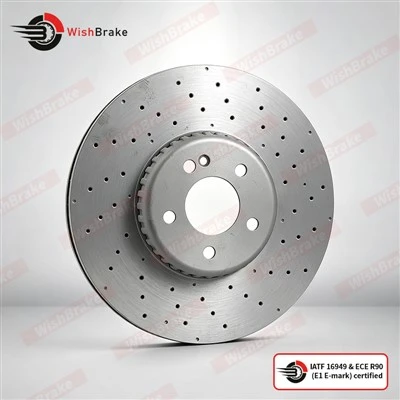
What about performance vehicles? Let’s say a sports car, like a BMW M3 or a Ford Mustang GT. Those have even bigger differences between front and rear rotors. The front brakes on a performance car are often larger, slotted, or drilled to handle aggressive driving—track days, hard cornering, repeated stops at high speeds. The rear rotors, while still high-quality OE, are designed to complement the front brakes, not match them. Some performance vehicles even have rear rotors made of a different material, like carbon-ceramic, while the front uses iron. Interchanging them would throw off the brake balance, making the car prone to understeer or oversteer, which is a safety hazard for anyone driving on the street or track.
I’ve had a few customers ask me, “Can’t I just buy the same size rotors for front and rear?” The short answer is: you can, but it won’t work as intended. Aftermarket parts sometimes advertise “universal” rotors, but those are designed to fit multiple vehicles, not engineered for a specific axle’s load. OE rotors, by contrast, are tested extensively to meet Federal Motor Vehicle Safety Standards (FMVSS) and the manufacturer’s own durability requirements. When we supply OE rotors, every unit goes through a round of testing to ensure it can handle the exact load, heat, and use case of the axle it’s made for. If someone uses a front OE rotor on the rear, that rear rotor is now dealing with more force than it was designed for—leading to premature wear, warping, or even brake failure over time.
There is one caveat here: older vehicles, pre-1990s, sometimes did have interchangeable front and rear rotors. Back then, braking systems were simpler, and most vehicles had drum brakes on the rear, or small solid rotors that were similar in size. But even then, I’d caution against mixing them. The OE rotor for a 1985 Toyota Corolla front is a slightly different thickness than the rear, even if it looks the same. Today’s modern vehicles, with their anti-lock braking systems (ABS), electronic stability control, and lightweight materials, have far more specific requirements. The ABS sensor, for example, is mounted to the axle and relies on a specific tone ring attached to the rotor. Front and rear rotors have different tone ring tooth counts and positions, so even if you somehow forced the rotor to mount, the ABS light would come on immediately—and that’s not just a nuisance; it’s a sign the system isn’t working as intended, which is a critical safety issue.
As a supplier, I’ve seen firsthand what happens when people ignore these details. A few years ago, a small fleet company came to us complaining that their delivery vans were having consistent brake issues, with rear rotors wearing out twice as fast as they should. Turned out, their previous parts supplier had sent front rotors for both axles, cutting costs by using the same part for front and rear. The vans were braking unevenly, increasing fuel consumption and putting their drivers at risk. That’s why we make it a point to educate every customer, from independent mechanics to fleet managers, that OE rotors are not universal. We don’t just list part numbers—we provide details on which axle each part is designed for, and why those differences matter.
So, to circle back to the original question: Do OE brake rotors fit both front and rear axles equally? No, they don’t—and that’s a good thing. The differences between front and rear OE rotors aren’t arbitrary; they’re the result of decades of engineering, testing, and real-world use. They’re designed to work in harmony with every other part of your brake system, to keep you safe, improve fuel efficiency, and extend the life of your entire braking setup.
If you’re in need of reliable OE brake rotors for your vehicles, whether you’re a mechanic stocking parts, a fleet manager maintaining your trucks, or a vehicle owner looking for authentic replacement parts, we can help. Our team has decades of experience matching the right OE rotors to the exact axle and vehicle you’re working on, so you don’t have to worry about compatibility issues or safety risks. Reach out to our team to discuss your needs, and we’ll work with you to find the right parts for your application.
Brake Rotors By VEHICLE References
- Brake Design and Safety, 2nd Edition, R. Limpert, SAE International, 1999.
- Federal Motor Vehicle Safety Standard No. 135: Light Vehicle Brake Systems, National Highway Traffic Safety Administration, 2020.
- “Heat Dissipation in Automotive Brake Rotors: A Comparison of Vented and Solid Designs”, Journal of Automotive Engineering, Vol. 225, No. 10, 2011, pp. 1327-1338.
- SAE International Standard J2977: Brake Rotor Performance Requirements, 2018.
Qingdao Wish Auto Parts Co., Ltd.
Qingdao Wish Auto Parts Co., Ltd. is one of the most professional oe brake rotors manufacturers and suppliers in China. We are committed to providing high quality customized automotive brake discs with competitive price. Welcome to wholesale CE approved oe brake rotors in stock here and get quotation from our factory. 1 year warranty is available.
Address: No.45 Pengwan Road, Qingdao, Shandong Province, China
E-mail: SALES@wishbrake.com
WebSite: https://www.wishbrakeparts.com/
