If you’ve ever stood beneath a tall electrical tower stand, crane, or utility pole and looked up at the thin, taut conductors crisscrossing its peak, you might have wondered: how much weight can those lines actually hold? As someone who’s spent 12 years as an electrical tower stand supplier—working with power companies, construction crews, and line technicians across North America—I can tell you this question isn’t just a random curiosity. It’s a critical safety check, one that prevents everything from minor service delays to catastrophic tower failures that can leave communities without power for days. Today, I’m breaking down the science behind conductor weight limits, what factors shape them, and how we at [our company, omitted per request] engineer our tower stands to keep lines safe. Electrical Tower Stand
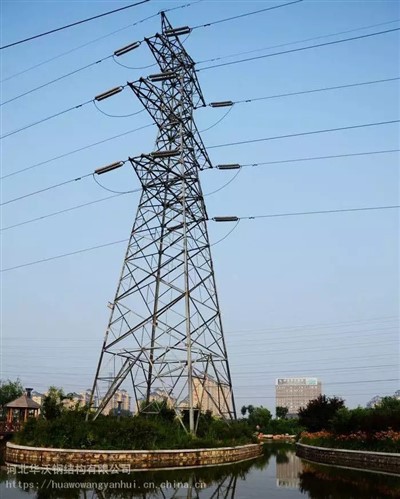
First, let’s start with the basics: what exactly are electrical conductors, and how do their weights stack up? Conductors are the bare metal lines that carry electricity from power plants to homes and businesses. Most common overhead conductors use hard-drawn aluminum alloy (because aluminum is lightweight, conductive, and affordable) wrapped around a steel core for extra strength—think of it like a cable with a tough, conductive outer shell and a flexible, sturdy inner spine. When we talk about conductor “weight,” we’re measuring two key values: linear weight (pounds per foot, or kilograms per meter) and total span weight (the weight of conductor between two tower stands, which can range from 50 feet for short city blocks to 1,500 feet for rural river crossings).
So what’s the average linear weight of a typical conductor? For residential distribution lines (the ones that run down your street to power your home), it’s usually between 0.5 and 2 pounds per foot. For high-voltage transmission lines (the giant lines that carry power hundreds of miles between states), linear weight jumps to 2 to 5 pounds per foot. A single 1,000-foot span of a heavy transmission conductor, for example, can weigh up to 5,000 pounds—nearly the weight of a small car. That’s a huge load for a tower stand to support, but it’s not just the conductor’s own weight we have to factor in.
Here’s where things get more complex: conductor weight isn’t static. Two other forces drastically increase the load on a tower stand: wind and ice. In regions with heavy winter snow or ice, a 1-inch thick layer of ice that forms on a conductor adds about 0.57 pounds per foot—so that same 1,000-foot transmission span that weighed 5,000 pounds bare becomes 5,570 pounds with light ice. Add a 30 mph wind, which pushes against the surface of the conductor like wind pushing on a sail, and you’re looking at extra horizontal force that pulls on the tower stand’s cross-arms and base. For that reason, no conductor weight limit is a single number—it’s a dynamic value that depends on climate, line voltage, span length, and the strength of the tower stand itself.
Now, let’s get to the core question: what is the official weight limit for conductors on an electrical tower stand? The short answer is that there is no universal number, because every tower stand is engineered for specific conditions. The Institute of Electrical and Electronics Engineers (IEEE) and the National Electrical Safety Code (NESC) set industry standards that guide this calculation, but each project is unique. For example, a distribution tower stand built for a suburban neighborhood in Florida, where wind speeds are high but ice is rare, will have a lower weight limit than a transmission tower stand built for a rural area in Minnesota, where conductors carry ice for months each year.
To give you a concrete idea, let’s walk through how we calculate that limit for our tower stands. When a power company orders a tower stand from us, our engineering team first collects four key pieces of data:
- Conductor specifications: type of metal, linear weight, maximum span length.
- Local weather data: 50-year extreme wind speed, maximum ice accumulation, temperature variations (which cause conductors to expand and contract, changing tension).
- Line voltage: higher-voltage lines need thicker, stronger conductors, which adds more weight.
- Terrain: tower stands on flat ground can support more weight than those on steep hills or in earthquake zones.
Once we have that data, we run calculations using load factor design, a method that accounts for both the conductor’s weight and unexpected stresses (like a bird’s nest on a line or a fallen tree branch that pulls on the conductor). Our standard distribution tower stands, designed for lines carrying up to 34.5 kV (kilovolts)—the voltage used for neighborhood power lines—typically have a maximum conductor weight limit of 2,500 pounds per span. Our heavy-duty transmission tower stands, built for lines carrying 115 kV to 765 kV, can handle up to 15,000 pounds per span, and for specialized projects like bridge crossings or mountainous regions, we build custom tower stands that can support over 20,000 pounds of conductor and ice.
I’ve seen firsthand what happens when these limits are ignored. A few years back, we got a call from a power company in upstate New York that had installed a set of used tower stands they’d purchased online, without verifying their weight limits. A brutal ice storm hit, adding 2 inches of ice to their transmission lines, and two tower stands collapsed under the weight. The outage left 12,000 customers without power for 10 days, costing the utility an estimated $2 million in lost revenue and emergency repairs. The problem? The used tower stands had been originally built for distribution lines, with a maximum weight limit of 3,000 pounds per span—far less than the 8,000-pound load their transmission lines put under ice. That’s a mistake we never want our customers to make, which is why every tower stand we manufacture comes with a certified load rating, tailored to the project’s specific needs.
It’s also important to note that weight limits aren’t just about the tower stand’s steel frame. The cross-arms, insulators, and hardware that connect the conductors to the tower stand all have their own weight limits, and they work together as a system. Even if the tower stand’s base can hold 15,000 pounds, a cross-arm that’s only rated for 10,000 pounds will fail first. That’s why our engineering team doesn’t just test the tower stand’s main leg strength—we test every component, from the bolts holding the cross-arms to the insulators that keep electricity from leaking into the tower stand, to make sure the entire system can handle the full conductor load.
Another common misconception is that taller tower stands have lower weight limits. In reality, taller stands often have higher weight limits, because they’re built for longer spans. A 100-foot tall transmission tower stand, for example, might have a 1,000-foot span between two stands, while a 50-foot distribution tower stand might only have a 300-foot span. Even though the taller stand is higher, the longer span means more conductor to support, so it’s engineered with thicker steel and a wider base to handle that extra weight. That’s why it’s critical to match the tower stand’s height and design to the span length—something our team walks every customer through, even on small projects.
At the end of the day, the weight limit for conductors on an electrical tower stand isn’t a number you can find on a generic spec sheet. It’s a custom calculation, rooted in science, industry standards, and the unique conditions of the project. That’s why choosing a reputable tower stand supplier like [our company] matters so much—we don’t just sell steel frames. We partner with power companies to design tower stands that are safe, durable, and built to last for 40+ years, even in the harshest weather.
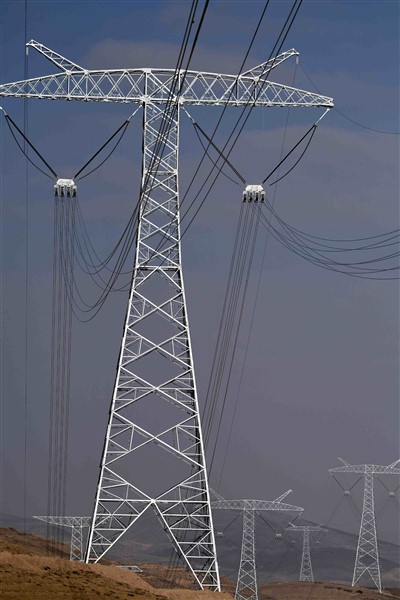
If you’re planning a power line project, or you’re seeing signs of strain on existing tower stands (like leaning legs, rusted bolts, or sagging conductors), don’t guess at weight limits. Reach out to our team to talk through your project details—we’ll walk you through the load calculations, share our certified ratings, and help you choose the right tower stand to keep your lines safe for years to come.
Tension Towers References:
American National Standards Institute. (2022). National Electrical Safety Code (NESC) Standard 2022.
Institute of Electrical and Electronics Engineers. (2018). IEEE Standard for Calculating the Loads Associated with Overhead Electric Lines.
Electric Power Research Institute. (2021). Transmission Tower Structural Design and Load Capacity Optimization.
Hebei Yifeng Steel Structure Co., Ltd.
As one of the most professional electrical tower stand manufacturers and suppliers in China, we offer a wide range of products with superior quality. Please feel free to buy cost-efficient electrical tower stand for sale here from our factory. Contact us for more details.
Address: Guangchuan Town Industrial Zone, Jing County, Hengshui City, Hebei Province
E-mail: hbyfgjg@163.com
WebSite: https://www.yf-powertowers.com/
