If you’ve ever worked with metal components that require precision joining—whether for heavy equipment, structural steel, or custom industrial parts—you’ve likely heard the term “heat affected zone” (HAZ) tossed around in welding conversations. As a supplier specializing in boring and welding services, I field this question almost weekly from clients: “What exactly is the HAZ, and why does it matter for my project?” Today, I’m breaking this down in plain, practical terms, no overly dense textbook jargon, and sharing how we factor HAZ management into every boring welding job we take on. Boring Welding

First, let’s start with the basics to set the stage. Boring welding is a specialized process that combines two critical metalworking steps: boring (machining a precise, cylindrical hole or opening in a metal part, often to replace worn or damaged sections) and welding (fusing that new section back into the component to restore its structural integrity). Think of it like patching a crack in a massive steel gearbox shaft or resizing a bearing housing on a construction excavator—parts that don’t just need to hold together, but hold up to thousands of pounds of force, constant vibration, and extreme temperatures.
When you apply intense heat to metal during welding (even the controlled heat we use for boring welding), something unintended happens right around the weld seam. That area, where the heat from the welding process changes the metal’s physical and chemical properties without actually melting it, is the HAZ. It’s not a flaw by default, but it’s a high-stakes zone—one that can make or break your component’s lifespan if not managed correctly.
Let me paint a clearer picture. Suppose we’re repairing a worn hydraulic cylinder rod for a farm tractor. The rod has a 2-inch diameter section that’s scored and worn beyond OEM specs, so we bore out that worn area, machine a matching new rod section, then weld the two ends together. When we strike the arc or apply the filler metal, the heat spreads outward from the weld pool. For steel (the most common metal we work with in boring welding), that heat can range from around 1,100°F (where crystal structure starts to shift) to just below the melting point of the base metal. Within that radius, the metal changes: grains grow, hardness varies, and sometimes, if the heat is too high or too uneven, we get brittle, weak areas that crack under stress. That’s the HAZ.
Now, not all HAZs are the same. Their size and behavior depend on three big factors: the type of metal we’re working with, the welding process we use, and our control over heat input during the boring welding job. For example, stainless steel has a narrow temperature range where its structure doesn’t warp, so its HAZ tends to be smaller than that of carbon steel. High-strength alloy steels, which we use for heavy mining equipment parts, are extra tricky—their HAZ can become prone to hydrogen-induced cracking if we don’t slow the cooling rate properly. On the flip side, if we use a low-heat welding process (like gas metal arc welding with a thin filler rod) combined with precise boring cuts that align perfectly, we can shrink the HAZ to just a few millimeters wide, which is ideal.
Here’s where I see a lot of clients make mistakes: they skip HAZ planning because they’re focused only on getting the weld to stick, not understanding that the HAZ is often the first place a repaired part fails. Last year, a construction company brought us a 10-foot-long steel crane boom section that had cracked at a previous repair. They’d hired a general welder who’d used too much heat, creating a HAZ that was twice as wide as it should have been, and the boom snapped during a lift. When we stripped the old weld, we could see the brittle, cracked HAZ along the seam—an avoidable error. That’s why, as a boring welding supplier, we bake HAZ management into every step, not just as an afterthought.
Let’s walk through how we do that on a typical boring welding job to make it tangible. First, before we even touch a welding torch, our metallurgists review the client’s part specs, the metal type, and the load the part will bear. For a component that runs 24/7 in a sawmill, for instance, we use low-heat, multi-pass welding (instead of one big heat blast) because each small weld pass lets the metal cool slightly, reducing HAZ size and brittleness. Next, our boring process is calibrated to create a precision fit between the original part and the new section—no gaps, because uneven gaps force us to add more filler metal, which means more heat and a bigger HAZ. We also use pre-heating for high-carbon steels: warming the base metal to 300-500°F before welding slows the cooling of the HAZ, preventing that dreaded hydrogen cracking.
After welding, we do two critical checks to validate the HAZ is up to par. First, we use a non-destructive testing method called hardness testing: we scan the weld, the HAZ, and the base metal to make sure hardness is consistent. If the HAZ is too hard, it’s brittle; too soft, it can’t handle wear. Second, we do magnetic particle testing to detect any tiny cracks in the HAZ that we might not see with the naked eye. It’s an extra step, but it’s saved dozens of our clients from costly part failures in the field.
I should also clarify a common misconception: HAZ isn’t always a bad thing. In fact, in some cases, a mild HAZ can be beneficial. For metal components that need to be slightly ductile near the weld (to absorb shock), a small, controlled HAZ that’s not overly hard can work in your favor. The key is predictability. When you partner with a boring welding supplier who understands HAZ, you don’t have to guess about whether your part will hold up—they can test it, plan for it, and adjust their process to meet your needs.
So why does this matter for your business? If you’re repairing heavy equipment, fabricating custom metal parts, or maintaining structural steel, the HAZ is the hidden link between a weld that holds for a month and one that lasts for years. Cutting corners on HAZ management leads to unplanned downtime, which is the bane of any industrial operation. We’ve seen clients who saved a few bucks on a cheap, generic welder end up paying 10x that in lost productivity when a part broke down. Our approach, centered on precise boring and controlled welding, ensures the HAZ is optimized for strength, durability, and reliability.
At the end of the day, boring welding isn’t just about fusing two pieces of metal—it’s about understanding how every step affects the material around the weld. The HAZ is a critical part of that equation, and it’s one we never overlook.
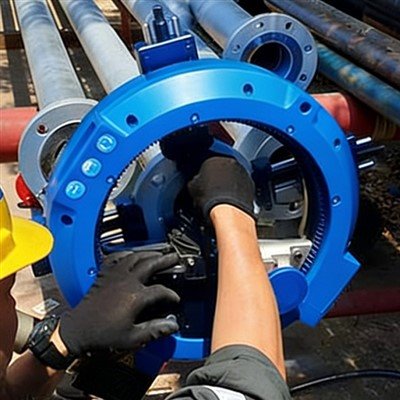
If you’re working on a project where you want to make sure your HAZ is managed correctly, or if you have a part that’s failed due to poor welding and HAZ issues, we’re here to help. We can walk you through our process, review your part specs, and provide a no-obligation quote tailored to your needs. Reach out today to schedule a consultation and get your next boring welding job on track for long-term success.
Portable Milling References
- American Welding Society. (2020). Welding Terms and Definitions (AWS A3.0).
- Lindberg, R. A. (2010). Processes and Materials of Manufacture (5th ed.). Pearson Education.
- Weman, K. (2012). Welding Processes for Structural Applications. Woodhead Publishing.
- International Organization for Standardization. (2018). Welding of Steel Structures – Quality Requirements (ISO 3834).
Shangqiu JDA Machinery Technology Co., Ltd.
As one of the most professional boring welding manufacturers and suppliers in China, our products have good reputation in the market. Please rest assured to buy cheap boring welding for sale here from our factory. Quality products and reasonable price are available.
Address: No.55 Pingyuan Middle Road, Liangyuan District, Shangqiu, Henan, China
E-mail: sales@jdamachines.com
WebSite: https://www.jda-machines.com/
