If you’ve ever walked through a construction site, rummaged through a metal supply yard, or even assembled a prefab bookshelf or garage storage unit, you’ve likely crossed paths with cold-rolled steel sections. As a cold-rolled sections supplier, I get asked about their standard size more than any other question—far more than grade specifications, surface finishes, or tolerance limits. It makes sense, too: size is the first thing people nail down before a project, whether it’s framing a commercial warehouse, building agricultural equipment, or crafting custom machinery parts. Cold-rolled Sections
A lot of folks assume “standard” means one universal set of dimensions, but that’s not how cold-rolled steel works. Unlike hot-rolled steel, which is formed at high temperatures above its recrystallization point, cold-rolled steel is rolled at room temperature, right after the hot-rolled coil is processed. That gives it a smoother finish, tighter tolerances, and higher tensile strength, but it also means its standard sizes are tailored to specific product shapes and industry use cases. Let’s break this down clearly, based on the standards I and my team follow daily to ship parts that fit exactly what our customers need.
First, the big governing standards set by ASTM International, the American Iron and Steel Institute (AISI), and the International Organization for Standardization (ISO) are the backbone of all cold-rolled steel section sizing. These standards are non-negotiable for suppliers because they ensure consistency across manufacturers, so a beam from Ohio fits the same bracket as one from Germany, and a tube from India lines up with fittings from Canada. For North American markets, AISI’s Cold-Rolled Steel Sections Specification (AISI S100) is the go-to, while ISO 10537 covers global dimensions for cold-formed steel sections used in general construction, and ASTM A1008 specifies the material itself, with sizing requirements embedded throughout.
Now, let’s dive into the most common cold-rolled steel sections, and their standard sizes, because size varies wildly by shape. The four most popular shapes I supply are channels (C-channels), angles, square and rectangular tubing, and hollow structural sections (HSS)—wait, HSS are often hot-rolled, but we do offer cold-rolled HSS for smaller, precision applications, so I’ll include that too.
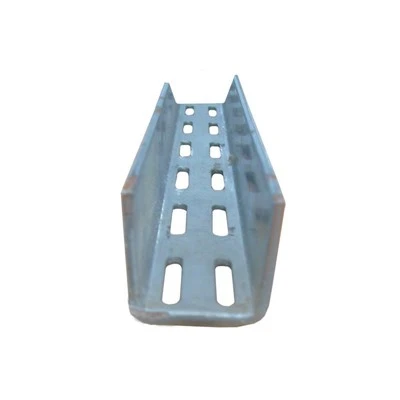
Starting with C-channels, aka “cold-roll channels.” These are the U-shaped sections used for framing support, shelf brackets, and trailer frames. The standard sizes for these are based on the depth of the channel (the height of the U, from top to bottom) and the width of the flanges (the horizontal arms at the top and bottom of the U). For nominal depths, standard C-channels range from 1 inch to 12 inches, but wait—those are nominal, not exact. The actual depth has tight tolerances, per AISI: a 4-inch nominal channel is actually 4.000 inches deep, plus or minus just 0.006 inches, which is way tighter than hot-rolled. The flanges follow the same logic: a 4-inch channel has 1.125-inch flanges, give or take 0.005 inches. For thinner-gauge channels, used in lightweight framing (like interior wall studs or storefront trim), the gauges go as low as 16 gauge, which is 0.0598 inches thick, up to 10 gauge at 0.1345 inches. That’s key because gauge thickness is a big part of size for cold-rolled sections—unlike hot-rolled, where thickness is often in 1/8-inch increments, cold-rolled gauges are precision decimal values.
Next up: angle sections, the L-shaped ones used for bracing, shelf corners, and frame reinforcement. Standard angles are equal leg or unequal leg, and their sizing is based on the length of each leg and their thickness. Equal leg angles are the most common, and standard sizes here start at ½ inch x ½ inch, going all the way up to 8 inches x 8 inches. Thicknesses for these range from 16 gauge (0.0598 inches) up to ¼ inch, with standard increments of 1/16 inch for thicker legs. Unequal leg angles follow similar rules, with legs like 2 inches x 4 inches, 3 inches x 6 inches, etc., and thicknesses matching their equal-leg counterparts for cross-compatibility with brackets and fasteners. A lot of fabricators love standard angles because they work off pre-cut, pre-drilled holes that are standardized, so no custom tooling needed for quick builds.
Then there’s square and rectangular tubing, often called “structural tubing” or “rectangular hollow sections.” These are workhorses for everything from truck frames to playground equipment to residential deck railings. Standard cold-rolled square tubing sizes range from ½ inch x ½ inch up to 8 inches x 8 inches, while rectangular tubing runs from ½ inch x 1 inch up to 8 inches x 12 inches. Thickness here is a big differentiator: for small tubing (under 2 inches in size), standard gauges are 16, 14, 12, 10, and 8, with 8 gauge being the thickest for lightweight uses. For larger tubing, thickness increments go up to 3/8 of an inch, with standard sizes like 4 inch x 4 inch x ¼ inch, or 6 inch x 4 inch x 3/16 inch. What’s important here is that cold-rolled tubing has a much smoother inside and outside surface than hot-rolled, so it’s often used for projects where weld quality or a painted finish matters—like store fixtures, where a rough hot-rolled surface would be impossible to paint evenly.
Wait, let’s address a common confusion: a lot of people mix up cold-rolled standard sizes with hot-rolled, especially when it comes to HSS (Hollow Structural Sections). Most HSS are hot-rolled, but cold-rolled HSS exist for smaller, precision applications, with tighter dimensional tolerances. Cold-rolled HSS standard sizes go down to ¼ inch x ¼ inch, which is way smaller than the smallest hot-rolled HSS, making them perfect for tiny parts like medical device frames or small machinery mounts. That’s a niche use, but it’s a big one for my customers in the tech and medical equipment space, so I always make sure to clarify that difference when someone asks about HSS sizes.
Now, a critical point that a lot of online guides miss: “standard size” doesn’t mean every supplier stocks every standard size. That’s where my team at the cold-rolled sections business I run (I’ll keep it casual, like I’m talking to a regular fabricator I know) has a leg up on big-box metal suppliers. We stock the most frequently ordered standard sizes for each section, so if you need a 4-inch C-channel in 12 gauge, or a 2-inch x 2-inch angle in 1/8 inch, we can ship it same-day, no lead time. But for less common standard sizes, like a 10-inch equal leg angle, we keep those in our rolling mill’s inventory of coil, so we can roll them to your exact dimensions the next day, still holding to AISI tolerances.
Tolerances are a huge part of the standard size conversation, because a cold-rolled section is only “standard” if it meets exact dimensional limits. For example, the flatness of a cold-rolled channel’s web (the middle part of the U) can’t vary more than 0.010 inches per foot, per AISI standards. That’s why when a fabricator cuts a standard channel to length, it fits perfectly into a pre-cut frame, no shimming needed. Hot-rolled can have up to 10 times that variation, so cold-rolled standard sizes are non-negotiable for precision projects where fit is everything.
Another thing: the automotive and appliance industries have their own specialized standard sizes for cold-rolled sections, which isn’t covered in the construction-focused AISI standards. For example, cold-rolled steel sections used for automobile door frames follow SAE (Society of Automotive Engineers) standards, with sizes tailored to crash test requirements—thinner gauges for lightweighting, but with exact depth and width to meet safety regulations. Appliance manufacturers use similar SAE and ISO standards for refrigerator frames and washing machine cabinets, so their “standard size” isn’t the same as a construction worker’s, which is why I always ask customers what industry their project is for before recommending sizes.
I’ve seen a lot of small fabricators make mistakes by assuming a standard size from one supplier matches another’s, but that’s only true if they’re all following the same governing standard. Last year, we had a customer come to us with a botched order for custom shelf frames, where a supplier had sent “standard” 3-inch angles that were actually 2.875 inches, not the 3.000 inches required for their brackets. That cost them thousands in rework, so now we always include a copy of the AISI standard number on every packing slip, so our customers can verify the dimensions themselves if they need to.
For residential DIYers, too, understanding standard sizes matters. If you’re building a backyard shed frame, a standard 2-inch x 2-inch cold-rolled angle is going to be lighter than hot-rolled, but it’s strong enough for a small structure. For a garage door frame, you’d want a 3-inch or 4-inch C-channel in 12 or 14 gauge, which are standard sizes perfect for supporting the door’s weight. A lot of DIYers don’t know that cold-rolled sections are often sold by gauge, not just length, so when you ask for a 4-foot C-channel, make sure you specify the gauge to get the right thickness for your project.
Now, what about custom sizes vs. standard? As a cold-rolled sections supplier, most of my business is still standard sizes, because that’s what keeps projects on budget and on timeline. But standard sizes are also a starting point for custom work. For example, if a customer needs a 5-inch x 3-inch unequal angle that’s not a standard size, we can roll it using the same rolling processes we use for standard angles, just adjusting the roll dies to get the exact leg lengths. The tolerance is still within AISI limits, so it’s just as reliable as a standard size.
I should also mention that over the past decade, standard sizes for cold-rolled sections have evolved a bit, driven by demand for more sustainable construction and lightweight parts. ISO updated its standards in 2018 to add smaller, thinner gauge cold-rolled sections for prefab and modular construction, which cut down on material waste. That’s a big win for both builders and the environment, and it’s changed what counts as a “standard” size for new projects—now, a lot of modular builders are ordering 1-inch C-channels, which barely existed as standard sizes 15 years ago.
At the end of the day, if you’re working with cold-rolled steel, the standard size isn’t a random number someone made up—it’s a set of dimensions proven to fit, last, and work with existing fasteners, brackets, and machinery, all set by industry standards bodies to keep everyone on the same page. But don’t let the “standard” label fool you: not all standard sizes are stocked, and not all suppliers follow the same tolerances.
If you’re working on a project right now, whether it’s a small custom shelf, a commercial framing job, or industrial equipment, and you need to confirm the right standard size for your cold-rolled sections, or you want a quote on standard or custom sizes, reach out to our team to discuss your requirements. We have in-depth knowledge of AISI, ISO, and SAE standards, and can help you pick the right size, gauge, and grade to keep your project on track.
Ratchet Tie Down References
ASTM A1008 / A1008M-22, Standard Specification for Steel, Sheet, Cold-Rolled, Carbon, Structural, High-Strength Low-Alloy, and High-Strength Low-Alloy with Improved Formability, Quality Levels, and Applications. American Society for Testing and Materials, 2022.
AISI S100-16, North American Specification for the Design of Cold-Formed Steel Structural Members. American Iron and Steel Institute, 2016.
ISO 10537:2017, Cold-formed steel sections for general structural purposes — Dimensions and tolerances. International Organization for Standardization, 2017.
SAE J2329:2021, Steel, Cold-Rolled, for Automotive Structural Applications. Society of Automotive Engineers, 2021.
Shengkun Precision Roll Forming Profiles (Shanghai) Co., Ltd.
As one of the most professional cold-rolled sections manufacturers and suppliers in China, we’re featured by quality products and low price. Please rest assured to buy high-grade cold-rolled sections made in China here from our factory. Contact us for pricelist and quotation.
Address: No.3 Workshop Building Lane2665 Yexin Highway Yexie Town Songjiang District Shanghai China
E-mail: sk@shengkun-rollforming.com
WebSite: https://www.sk-rollforming.com/
